

You’re finally asleep when it happens: that single sharp chirp from the ceiling, or worse, a full siren in the middle of a quiet night. You stumble around the hallway, press buttons, swap a battery at random, and hope it stops. Two nights later, it’s back.
If your smoke detector is beeping or your fire alarm goes off “for no reason”, it’s almost never truly random. The alarm is trying to tell you something, sometimes about a real fire risk, sometimes about its own health.
Why Do Smoke Detectors Beeping or Going Off Randomly?
Most of the time, a smoke detector beeping or a fire alarm that goes off randomly is caused by something simple: a low battery, dust in the sensing chamber, steam or high humidity, poor placement (too close to kitchens or bathrooms), tiny insects, harsh chemicals, or a unit that’s reached the end of its life (typically around 10 years).
Short, regular chirps usually mean battery or end-of-life issues. A continuous, loud alarm means treat it as a fire: check for smoke, evacuate if you’re unsure, and call 911. Never ignore a sounding alarm until you’ve ruled out a real fire.
Once you’ve confirmed there’s no fire, the fix is often simple: cleaning, moving, or replacing the device, or having a professional inspect your system.
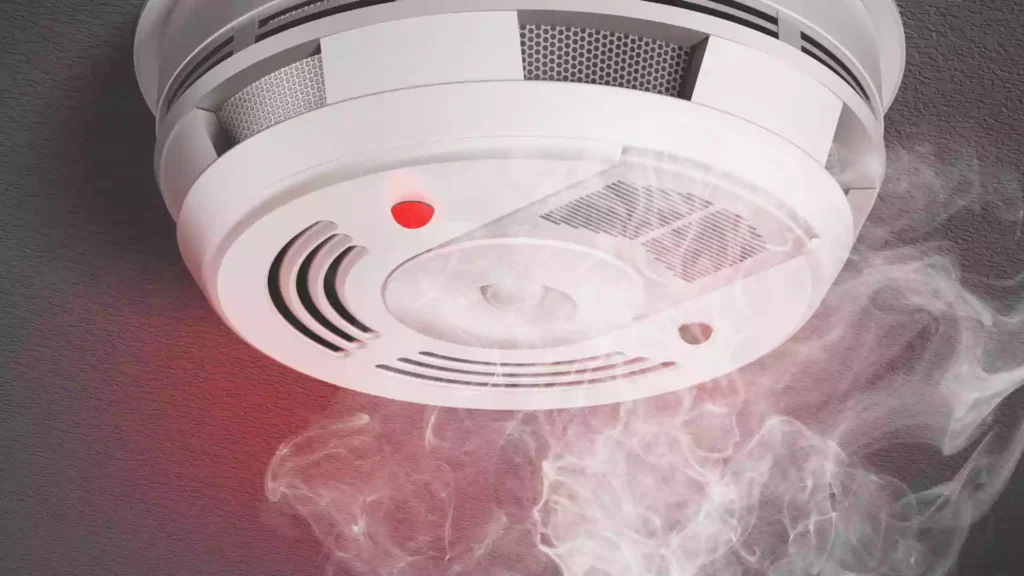
Is a Beeping Smoke Detector Always an Emergency?
Not always, but you must assume it might be until you prove otherwise. That’s the non-negotiable rule.
- A continuous, loud alarm across one or more detectors means:
- Look for visible smoke or burning smells.
- If anything seems wrong or you’re not sure, evacuate and call 911.
- A short, single chirp every 30–60 seconds is usually the alarm complaining about battery power or age, not smoke.
The danger is getting used to nuisance alarms and treating everything as a false alarm. That’s when people start taking batteries out, and that’s where real tragedies start. National fire guidance is blunt about this: never disable a smoke alarm to silence nuisance beeping.
Why Your Smoke Detector Keeps Beeping or Going Off “For No Reason”
If you’re sure there’s no fire, here are the most common culprits behind that smoke detector beeping with no smoke.
1. Real Smoke – Just Not the Kind You’re Worried About
Sometimes the alarm is doing its job perfectly. It just doesn’t care whether the smoke came from a house fire or your latest attempt at oven chips.
Frequent triggers include:
- Burnt food, especially in kitchens and toaster ovens.
- Smoke from fireplaces that back-draft into the room.
- Outdoor grill or campfire smoke drifting through open windows.
If every cooking session sets off the alarm, it may be too close to the kitchen. The solution is to move the alarm slightly further away, not to remove it entirely. Guidance typically suggests avoiding installation within about 10 feet of cooking appliances, while still protecting the kitchen route and escape paths.
2. Steam and High Humidity
To a smoke alarm, dense water vapour can look a lot like smoke. Steam from:
- Hot showers
- Boiling pots
- Humidifiers
can all reach the sensing chamber and trigger a false alarm.
If your alarm sounds every time someone showers or runs the kettle, it’s probably too close to the bathroom or kitchen. Code-based recommendations often call for keeping alarms a few feet away from bathrooms and out of the direct path of steam.
3. Low Battery or Power Problems
A classic cause of both chirps and nuisance alarms is low power:
- Battery-only alarms rely entirely on that 9-volt or built-in lithium cell.
- Hardwired alarms still usually include a backup battery that can fail quietly in the background.
When the voltage drops, some units begin to chirp; others can behave unpredictably, triggering alarms when the temperature shifts or when there’s a brief power surge.
If you haven’t changed batteries in the last year, or ever, that’s your first stop.
4. Dust, Debris, and Tiny Insects
Inside your alarm is a sensing chamber. In photoelectric alarms, it uses a light beam is used; in ionisation alarms, it uses a tiny current is used. Either way, that chamber is designed to spot very small particles in the air. Unfortunately, it doesn’t distinguish well between smoke, dust, and bugs.
Over time, dust can build up on the sensor, or a spider can decide the housing is a cosy cave. Their movements or the shifted airflow can trigger false alarms.
A gentle clean can make a big difference:
- Take the alarm down.
- Remove the cover.
- Use a soft brush or vacuum attachment to clean vents and the chamber area.
- Avoid sprays, water, or aggressive wiping; they can damage the sensor.
If your home is prone to insects, consider light pest control around (not on) the device.
5. Harsh Chemicals and Aerosols
Certain aerosols, strong cleaning sprays, paint fumes, bug sprays, and even salon products can set off some types of smoke detectors or leave a residue that interferes with the sensor.
If you’re decorating or deep-cleaning:
- Keep rooms well ventilated.
- Avoid spraying directly near alarms.
- Cover the device temporarily if recommended by the manufacturer, then uncover and test it afterwards.
6. Wrong Placement in the First Place
Even a perfectly good alarm will behave badly if it’s in the wrong spot. Common problem locations include:
- Directly outside a bathroom door.
- Over a stovetop or too close to the kitchen.
- Right next to an HVAC vent, fan, or window, where air currents confuse the sensor.
- Above fireplaces or wood stoves.
Current guidance from NFPA and major manufacturers is consistent:
- Install smoke alarms inside every bedroom, outside each sleeping area, and on every level of the home, including basements.
- Mount them on the ceiling or high on a wall, away from dead air corners.
- Keep them a safe distance from kitchens and bathrooms to reduce nuisance alarms.
Small adjustments in location can dramatically reduce “random” alarms.
7. End of Life: The Alarm Is Just Too Old
Smoke alarms do wear out. Sensors become less reliable; internal components drift. NFPA 72 and many manufacturers recommend replacing residential smoke alarms at least every 10 years from the date of manufacture.
Signs your alarm may be at the end of its life:
- It still chirps after a fresh battery and a good clean.
- It falsely alarms more and more often.
- The label on the back is older than a decade.
At that point, it’s usually wiser and safer to replace than to fight it.
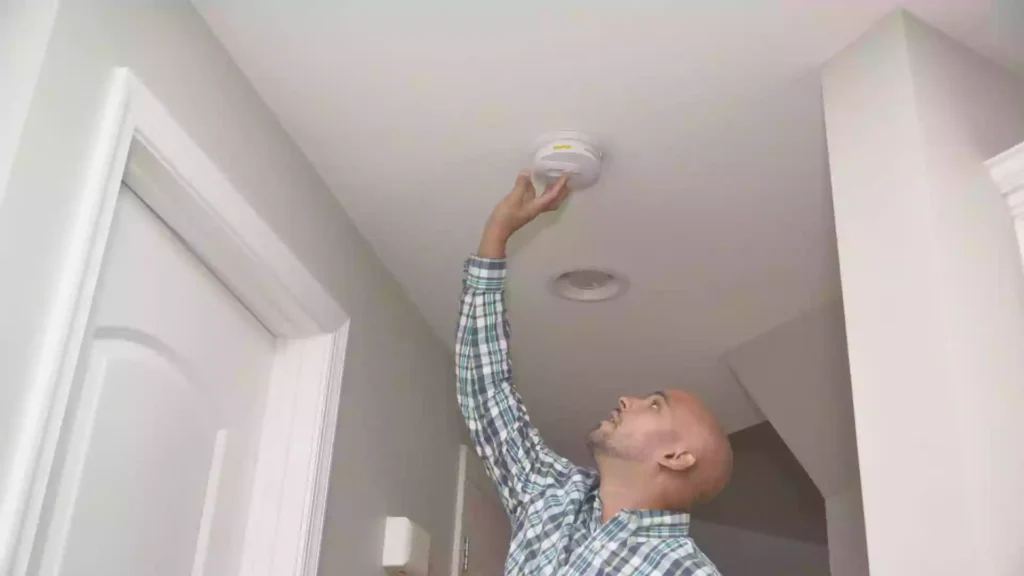
How to Safely Stop a Beeping or False-Alarming Smoke Detector?
Once you’ve checked for fire and you’re confident it’s a nuisance issue, work through this simple sequence:
1. Check the Date
Take the alarm down and read the manufacturer’s date. If it’s at or beyond 10 years old, replace it. Don’t waste time or money on an exhausted unit.
2.Replace the Battery
Use the type recommended on the label. Seat it firmly, close the drawer, then press the test button until you hear a full test alarm.
3.Clean the Alarm
Remove the cover, gently vacuum or brush around the sensor and vents. Wipe the exterior with a dry cloth.
4.Look at the Location
If the alarm is right over the bathroom, directly in the kitchen, above a fireplace, or next to a supply vent, relocate it to a nearby, more suitable spot while maintaining coverage of escape routes.
5.Reset the Alarm
Some models need a reset (holding the test/reset button for several seconds) after battery changes or cleaning to clear the memory.
If, after all that, the alarm still behaves unpredictably, or if your hardwired or interconnected fire alarm system is giving you recurring trouble, it’s time to bring in a professional.
When to Call a Fire & Life-Safety Professional
There’s a point where DIY stops being efficient or safe. You should call a qualified fire alarm company, like Titan Alarm & Fire here in Arizona, when:
- You have repeated nuisance alarms across multiple devices with no obvious cause.
- Your home has interconnected or panel-based alarms, and you suspect wiring or configuration issues.
- You manage a business, multi-unit residence, school, or facility that must meet fire code, inspection, and documentation requirements.
- You want to upgrade from a patchwork of old detectors to a monitored fire alarm system that integrates smoke, heat, and carbon monoxide protection.
Titan Alarm & Fire can:
- Inspect and test existing smoke and fire alarm systems.
- Clean, reposition, or replace problem devices.
- Design and install code-compliant, monitored fire alarm solutions for homes and commercial properties.
- Integrate smart detection, monitoring, and emergency response for faster, coordinated action when it counts.
Instead of waiting for the next 2 am chirp, you get a system that’s quiet when it should be, and loud when it needs to be.
FAQs
Why is my smoke detector beeping with no smoke anywhere?
If your smoke detector is beeping with no smoke, it’s usually a maintenance issue, not a hidden fire. Common causes include a low battery, dust or insects in the sensor, steam or high humidity, or a unit that’s simply too old and needs replacement. Always check for fire first, then work through battery, cleaning, and age before assuming everything is fine.
Why does my smoke alarm always go off when I cook or shower?
Cooking smoke, burnt food, and shower steam all produce particles or moisture that can fool a smoke alarm. If your alarm is too close to the kitchen or bathroom door, it will see that as smoke and do exactly what it was designed to do: sound off. Moving the alarm a little further away, improving ventilation, or switching to a photoelectric alarm in some locations can greatly reduce nuisance triggers.
How often should I replace my smoke detectors?
Most residential smoke alarms should be replaced every 10 years from their manufacture date, even if they still “work” when you press the test button. The test button only checks the electronics and sounder; it doesn’t tell you if the sensor has silently degraded. If your alarm is older than a decade, or keeps beeping after a fresh battery and cleaning, it’s time for a new one.