

Outdoor lights can help your home feel safer at night. They can light up dark paths, help you see who is near your door, and make it harder for someone to hide.
But lights are not a full security plan by themselves.
The best setup uses smart lighting, cameras, alarms, and fire protection together. Titan Alarm & Fire offers home automation, video surveillance, monitoring, and fire and smoke protection, so homeowners can build a more complete safety system.
This guide covers simple DIY security light tips, common mistakes, and the warning signs that mean it is time to call a pro.
What Are Security Lights and Why Do They Matter?
Security lights are outdoor lights placed around your home to help stop crime and keep your family safe at night.
They work in two main ways. First, they remove the cover of darkness that burglars rely on. Second, motion-activated models catch intruders off guard by turning on suddenly.
Homes without a security system are 300% more likely to be broken into. Security lights are one piece of that protection.
A study by the National Bureau of Economic Research found that improved outdoor lighting led to at least a 36% drop in serious crimes in high-crime areas of New York City. That is a big number for a relatively small investment.
But lights alone are not enough, and we will get to that.
Why Security Lights Matter
Security lights help in two clear ways. First, they improve visibility around entry points like doors, garages, and side gates. Second, they can support your cameras and alerts by making it easier to see motion outside at night.
Still, lighting has limits. Research on outdoor lighting and crime is mixed, so lights should be part of a layered home security plan, not the only tool you use.
Types of Security Lights: Which One Should You Choose?
Before you buy anything, you need to know what type of light fits your home and budget.
Motion-Activated Lights
These are the most popular choices. They only turn on when they detect movement, which saves energy and surprises anyone who walks near your home. They use infrared sensors to detect heat from a moving body.
- Best for: Front doors, driveways, side gates, and backyard entry points.
- Cost: $30 to $400, depending on the sensor type.
Dusk-to-Dawn Lights
These lights use a built-in sensor to turn on at night and off in the morning. They run all night, so they use more power. But they give constant light to key areas like your front porch or parking space.
- Best for: Main entry points where you want permanent lighting.
- Cost: Typically $40 to $150.
Solar-Powered Security Lights
These run on sunlight, so there are no electrical costs. They are easy to install since you do not need to wire them in. The trade-off is that they may be less bright and less reliable in cloudy weather.
- Best for: Walkways, garden paths, and low-traffic areas.
- Cost: $50 to $400 per light.
Floodlights
Floodlights throw a wide, bright beam over a large area. They are the strongest type of security light and are often used at the back of homes or near garages. They can be wired or solar-powered.
- Best for: Large open areas, backyards, parking spaces.
- Cost: $75 to $500.
Where to Install Security Lights (Placement Tips)
Placement matters more than most people think. A light in the wrong spot leaves blind spots that burglars can use.
Here are the best spots to install outdoor security lights:
1. Light the places people actually use
Start with the spots where people walk and where someone may try to enter.
Focus on:
- Front door
- Back door
- Garage door
- Driveway
- Side gate
- Dark paths and steps
This is the easiest way to improve safety fast. It also helps guests, family members, and delivery drivers move around your home at night.
2. Use Motion Lights in the Right Places
Motion lights are a smart choice for areas that do not need to stay bright all night.
They work well near:
- Backyards
- Garage corners
- Side yards
- Gates
- Driveway edges
Good placement matters. Recent lighting guidance says motion sensors usually work best when mounted about 6 to 10 feet high and aimed slightly down. That helps cover the target area without wasting light.
Try not to point motion lights at:
- Busy streets
- A neighbor’s windows
- Shiny surfaces
- Tree branches that move in the wind
These can trigger false alerts and annoy everyone.
3. Do not Create New Blind Spots
A very bright light in one spot can make the darker areas around it harder to see. That is a common mistake.
Instead of one harsh floodlight, think about balanced outdoor security lighting:
- One light near the entry
- One near the driveway
- One for the path
- One for the side yard if needed
The goal is simple: fewer shadows and better coverage.
4. Pick LED lights when you can
LED security lights are a strong choice for most homes because they use less power and last longer than older bulbs. They also turn on fast, which helps with motion-based lighting.
This is also a smart move for safety. NFPA reports that home fires involving electrical distribution and lighting equipment caused an average of 32,620 home fires per year in the most recent study period, along with 430 civilian deaths, 1,070 injuries, and $1.3 billion in direct property damage each year.
That does not mean security lights are unsafe. It means poor wiring, damaged parts, or old equipment should not be ignored.
5. Aim lights down, not out
A light should help you see your home. It should not blast light into the street or into someone else’s yard.
Aim lights:
- Down toward the doors
- Down toward paths
- Across the driveway
- Toward gates and fence lines
This usually gives you better usable light and fewer complaints.
6. Pair Lights with Cameras and Alerts
This is where basic lighting becomes smarter.
A camera sees more when the area is well-lit. A monitored system can also send alerts when something happens outside. Titan Alarm says its systems support home automation, smartphone control, and video monitoring, which helps homeowners keep an eye on their property even when they are away.
That is why security lights work best as part of a wider setup:
- Motion light turns on
- The camera records the area
- Homeowner gets an alert
- Monitored system adds another layer of support
A smart next step
If you already have outdoor lights but want better coverage, this is a good time to connect them with a full home security system. Titan Alarm & Fire can help Arizona homeowners add smart control, cameras, monitoring, and fire protection without making the setup feel too complex.
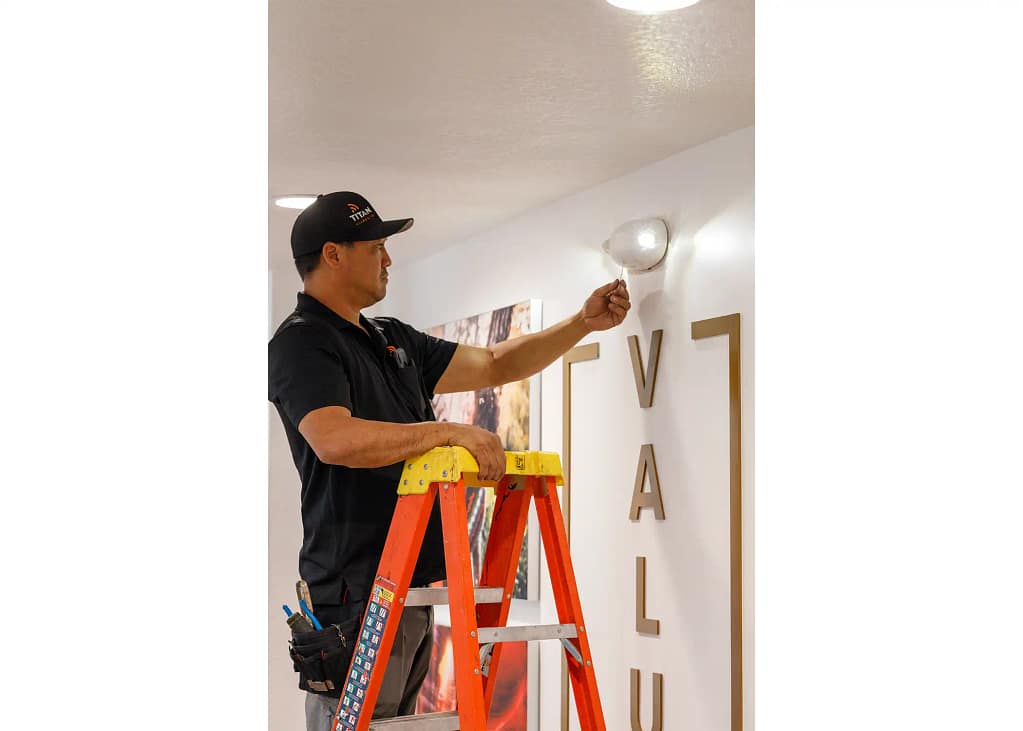
7. Keep Safety in Mind during any DIY work
Before you start:
- Turn off the power at the breaker
- Use the right ladder
- Read the fixture guide
- Make sure the light is rated for outdoor use
- Check for weather damage around old fixtures
The U.S. Consumer Product Safety Commission says its home electrical safety checklist should be done every 6 months. It also warns that its wiring guide is not a repair manual for fixing defective systems.
That is a good reminder: simple tasks may be DIY-friendly, but damaged wiring is not.
For the best coverage, mount lights 7 to 10 feet above the ground. This height lets the sensor cover a wider area and makes the light harder to tamper with.
Common Mistakes to Avoid
A lot of DIY security light problems come from poor placement, not bad products.
Watch out for these common mistakes:
- Mounting the light too high or too low
- Pointing sensors toward traffic or moving trees
- Using one bright light instead of balanced coverage
- Aiming lights into windows or the street
- Ignoring water damage or cracked fixtures
- Assuming lights alone are enough for full security
Avoiding these mistakes can make even a basic setup work much better.
When to Call a Pro
Some jobs should not stay DIY. Call a licensed pro if you notice:
- Sparks
- Smoke
- Burning smells
- Warm switch plates
- Flickering lights that keep happening
- Exposed wires
- Water near wiring
- Breakers that trip again and again
You should also call a pro if:
- Your home has no existing outdoor wiring
- You want several lights installed at once
- You want lights tied into cameras, alarms, or smart home controls
- You are not sure the circuit can handle the fixture
That is especially important when the goal is not just better lighting, but better security.
CPSC says home wiring hazards can lead to fire or shock, and its guide is meant to help people spot dangers before they seek professional help.
Do not Forget Fire Safety
Outdoor lighting helps with visibility. But full home safety also means protecting the house’s interior.
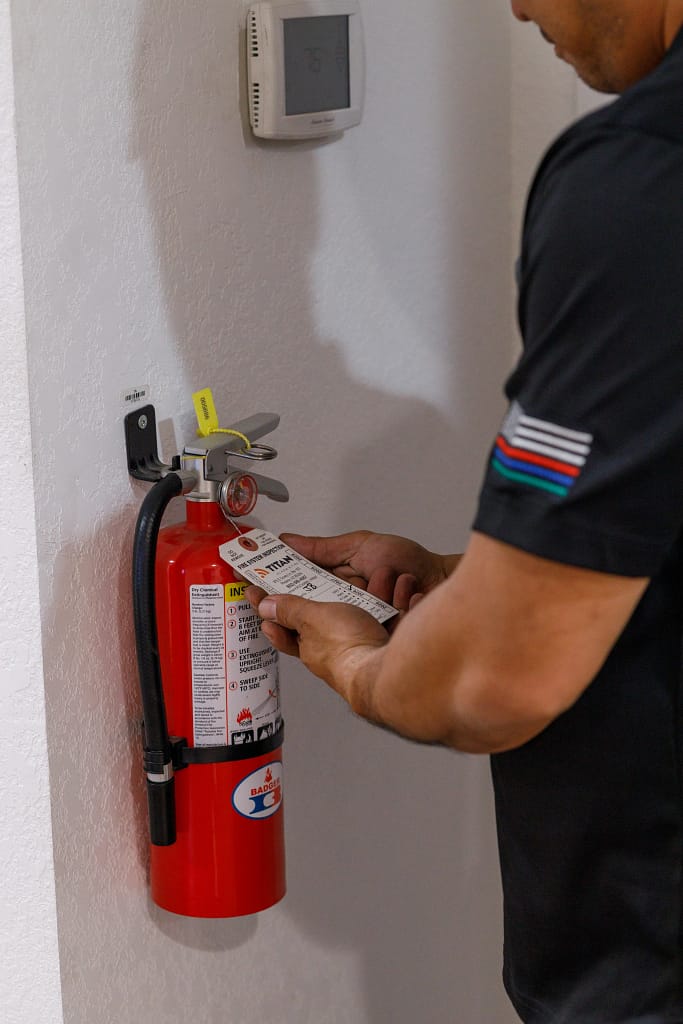
NFPA says roughly three out of five home fire deaths happen in homes with no smoke alarms or no working smoke alarms. It also says the risk of dying in a home fire is cut by 60% when working smoke alarms are present.
Titan Alarm & Fire offers fire and smoke protection, including alarm and monitoring services, so homeowners can build a more complete safety plan beyond outdoor lights alone.
Why Lights Alone are not Enough
Outdoor lights help with visibility. But they do not record video, send alerts, or contact help when something goes wrong.
That is why many homeowners add:
- Outdoor cameras
- Alarm monitoring
- Smart home controls
- Fire and smoke protection
Titan Alarm & Fire helps Arizona homeowners connect lighting, video surveillance, monitoring, and fire protection into one system that is easier to manage.
Lights Are a Start, Not the Finish Line!!
DIY security lights can make your home easier to see and harder to approach in the dark. The best results come from good placement, the right brightness, and fewer blind spots.
But lights alone are not enough.
For better protection, pair outdoor lighting with smart controls, cameras, alarm monitoring, and fire safety tools. That gives you a setup that does more than turn on when motion happens.
If you want help building a simple, stronger system, Titan Alarm & Fire can help you connect lighting, video surveillance, monitoring, and fire protection into one plan that fits your home.
FAQ
Are DIY security lights worth it?
Yes, they can improve visibility and help reduce dark areas around your home. They work best when paired with cameras, alarms, and smart alerts.
Where should I place outdoor security lights?
Start with front doors, back doors, garages, side gates, driveways, and walkways. Motion lights usually work best when mounted about 6 to 10 feet high and aimed down.
Can I install a security light myself?
Sometimes, yes. Simple swaps may be manageable if power is off and the fixture is rated for outdoor use. Call a pro if you see sparks, smoke, exposed wires, or breaker problems.
Do security lights stop crime?
They can help with visibility and may support deterrence, but they are not a complete answer on their own. A layered setup with lighting, cameras, and alarms is stronger.
Why mention fire safety in a security lighting blog?
Because complete home safety is not just about outdoor light. Working smoke alarms and fire monitoring also protect people inside the home. NFPA says working smoke alarms cut the risk of dying in a home fire by 60%.