Security technology trends in 2026 are moving in one clear direction: smarter, faster, and more connected. AI is now built into cameras, identity is the new front door, and physical and cyber security are merging into one system. For homeowners and businesses in Phoenix, Tucson, Mesa, Scottsdale, Chandler, and Paradise Valley, that shift changes what a strong security setup actually looks like.
The old model was simple. You put up an alarm, added a few cameras, and waited. If something happened, you reacted.
That model is fading fast.
Today, the focus is on predicting and preventing threats before they fully happen. AI watches the camera feeds. Edge devices make decisions in real time. Cloud systems tie homes, offices, and fire protection together. And identity-based attacks have pushed access control into the spotlight.
At Titan Alarm & Fire, we work with Arizona homes and businesses every day, and we are seeing these shifts up close. Below are the top security technology trends shaping 2026, what they mean, and how they tie back to real protection on the ground.
List of the Top Security Technology Trends in 2026
Here are the biggest security technology trends Arizona homeowners and businesses should watch in 2026:
- AI-driven defense and edge AI cameras.
- Identity-based access control and Zero Trust.
- Cloud-native and hybrid surveillance.
- Physical and cyber security convergence.
- Quantum-resistant cryptography.
- Mobile credentials and touchless access.
- Advanced sensors and multi-sensor detection.
- License plate recognition for smart entry.
Each trend matters on its own. But the real value comes when these tools work together as one connected security system.
1. AI-Driven Defense and Edge AI Cameras
AI is now the engine behind modern security. In 2026, AI does not just record video. It understands video.
There are two big shifts here.
- Agentic and Generative AI
AI platforms now sit on both sides of security. Defenders use AI to spot strange behavior, automate alerts, and route the right response. Attackers use AI to write better phishing emails, fake voices, and run faster attacks. Smart defense in 2026 means using AI tools that can match that speed.
- Edge AI on the Camera Itself
Edge AI means the smart processing happens directly on the camera, not in some far-away cloud. The camera itself can:
- Identify a person versus a package.
- Track movement across the property.
- Flag a vehicle that does not belong.
- Send an instant alert without streaming hours of video.
This matters in Arizona, where remote properties, large commercial sites, and master-planned communities cover a lot of ground. Edge AI reduces false alarms and helps response teams focus on what actually matters.
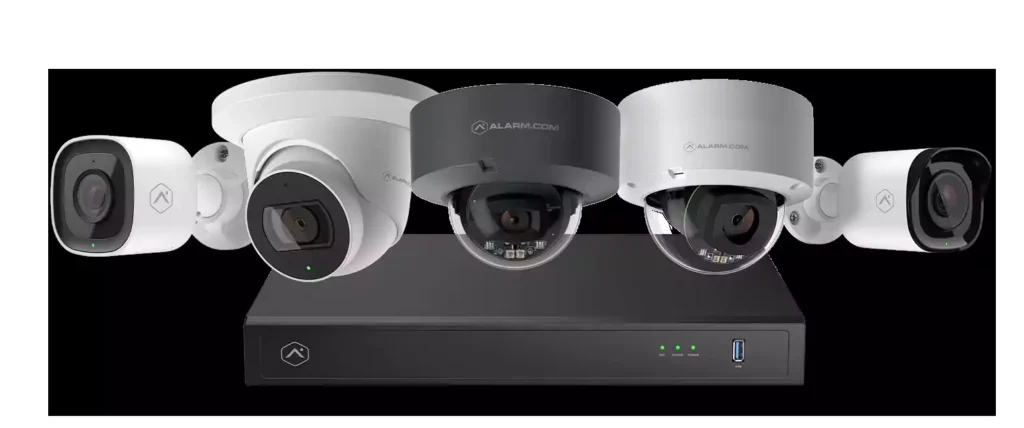
Titan Alarm & Fire video surveillance systems and commercial video verification are built to work with this kind of smart, AI-driven setup.
2. Identity-Centric Security and Zero Trust
In 2026, many security incidents start with identity misuse, stolen credentials, or weak access controls. That is why identity-based security and Zero Trust principles are becoming more important for both digital systems and physical entry points.
When stolen passwords, fake employees, and compromised credentials become the easy path, the strongest defense is to verify identity at every step.
- What does Zero Trust mean?
Zero Trust is a simple idea: never assume someone is who they say they are. Check every time. That applies to:
- Logging into a business system.
- Swiping a badge at a side door.
- Opening a back office or storage area.
- Connecting a new device to the network.
For Arizona businesses, this is where modern access control becomes a real frontline tool. Doors, gates, and entry points are now part of the identity layer, not just the locks layer.
Security system providers in Arizona, such as Titan Alarm and Fire, offer commercial access control and residential access control systems that support credential-based entry, mobile keys, and audit trails, which fit cleanly into a Zero Trust approach.
NIST defines Zero Trust around the idea that access should be continuously evaluated instead of automatically trusted based on network location or user position.
3. Cloud-Native and Hybrid Surveillance
Security is moving to the cloud, but not all the way. The 2026 standard is hybrid: smart devices on-site, with cloud management on top.
That means owners and managers can:
- View live and recorded video from anywhere.
- Lock or unlock doors remotely.
- Add or remove user access in seconds.
- See alerts across multiple locations in one place.
For a Phoenix retailer with stores in Tucson and Mesa, that is a major shift. One dashboard, one source of truth, one place to act. For homeowners with a second home or rental, the same principle applies.
Cloud-based platforms also support continuous monitoring. Instead of checking in once a day, the system watches itself around the clock.
4. Physical and Cyber Security Are Converging
The biggest mindset shift of 2026 is that physical and cyber security are now one system. They are no longer separate worlds.
Here is why that matters in real life.
A door reader is also a network device. A camera is also a server. A fire panel sometimes talks to a cloud platform. If one of those is weakly secured, attackers can pivot from the network to the building, or from the building to the network.
Converged security responds by:
- Tying badge swipes and door events to user identities.
- Linking video, alarms, and access into one timeline.
- Using multi-sensor cameras that hear glass breaking or detect aggression.
- Adding audio and environmental sensors next to the video.
For commercial properties across Arizona, this is where intrusion detection, video surveillance, and access control stop being separate purchases and start working as one layered system.

5. Quantum-Resistant Cryptography
Quantum computing is still emerging, but the security industry is already preparing. That is because data stolen today could be decrypted later by future quantum machines.
Manufacturers and standards bodies are moving toward post-quantum cryptography to protect:
- Long-term video archives.
- Access control logs.
- Cloud-stored credentials and identity data.
- Sensitive business records.
For most homeowners, this happens in the background. For businesses handling financial, medical, or legal data, it is worth asking your provider how their cloud platform plans to handle the shift.
NIST finalized its first post-quantum cryptography standards in 2024, including standards for key encapsulation and digital signatures.
6. Mobile Credentials and Touchless Access
Plastic key cards are gradually being replaced by mobile credentials. In 2026, more businesses are using phones, apps, and digital credentials to manage access because they are easier to issue, revoke, and track.
Benefits include:
- Lower risk of credential loss or theft.
- Faster onboarding and offboarding of staff.
- Built-in phone-level security (PIN, fingerprint, face ID).
- Easier audit trails for every door event.
When mobile credentials are paired with home automation and smart home technology, the same approach applies to residential properties: remote unlocking for trusted family members, time-bound codes for cleaners, and instant alerts when a door opens.
7. Smarter Sensors and Multi-Sensor Detection
Sensors in 2026 do much more than detect motion. They listen, measure air quality, and pick up patterns that older systems would miss.
Modern sensors can detect:
- Glass breaking or door forcing.
- Smoke, heat, and carbon monoxide.
- Vaping or smoking in restricted areas.
- Aggressive sound levels or shouting.
- Water leaks and environmental risks.
In Arizona, where summer heat, dust, and dry conditions all play a role, smart sensors also support fire protection. Fire alarms, sprinklers, and kitchen hood systems are increasingly integrated with the same monitoring platform as burglar alarms and video surveillance, giving owners a single, clear view of risk.
8. License Plate Recognition (LPR) and Smart Entry
License plate recognition has moved beyond highway use and is becoming more common in property security. In 2026, many gated communities, apartment complexes, commercial campuses, and government sites will be using or evaluating LPR as part of their entry and visitor management systems.
LPR cameras can:
- Recognize approved vehicles and automatically open gates.
- Flag unknown or watch-listed plates in real time.
- Tie vehicle data to entry logs and video.
- Speed up parking and visitor management.
Interesting fact: Across Phoenix, Scottsdale, Paradise Valley, and Tucson, more master-planned communities are asking about this kind of technology as part of their wider security plans.
Why These Security Technology Trends Matter in Arizona
Arizona is a unique market for security.
Recent crime data shows that Arizona property owners still need strong protection. USA Facts reports that Arizona had 1,792 property crimes per 100,000 people in 2024, even as overall crime trends have improved from prior years. That means package theft, burglary risk, vehicle-related theft, and after-hours business break-ins remain real concerns for many communities. Arizona also has fast-growing suburbs, busy commercial corridors, large gated communities, and a strong mix of residential, retail, and warehouse properties. Each of those needs something a little different.
The trends above support that mix because they share a common idea: layered, intelligent, and connected protection.
For most Arizona property owners, that means three practical moves in 2026:
- Upgrade older cameras to AI-capable, edge-enabled models.
- Tie access control, alarms, and video into one cloud-managed platform.
- Treat fire protection and intrusion as one connected system, not two separate ones.
Security Technology Planning for Arizona Properties
Security needs can look different across Arizona. A retail business in Phoenix may need video verification, intrusion detection, and after-hours monitoring. A gated community in Scottsdale or Paradise Valley may need access control, LPR cameras, and visitor management. A warehouse in Mesa or Chandler may need fire protection, monitored alarms, and camera coverage across loading areas. A second home or rental property in Tucson may need smart locks, remote video access, and mobile alerts.
That is why the best security setup is not always the newest system. It is the system that fits the property, the risk, and the way people actually use the space.
Final Thoughts
The security technology trends shaping 2026 are not about flashy gadgets. They are about better decisions, faster responses, and fewer blind spots.
AI on the camera. Identity at the door. The cloud in the background. Sensors that listen as well as see. Fire and security are treated as one connected system.
For Arizona homes and businesses, the message is simple: the tools have changed, and the bar for “good security” has moved. The good news is that upgrading does not have to mean ripping everything out. The best path is usually to layer smarter technology on top of what is already working.
Want to know which 2026 security technology trends make sense for your property? Contact Titan Alarm & Fire at 602-680-4567. We can review your current setup, identify gaps, and recommend the right mix of video surveillance, access control, intrusion detection, fire protection, and monitoring.
FAQs
What is the biggest security technology trend in 2026?
AI-driven security is the biggest trend in 2026. Edge AI cameras, identity-based access, and cloud-managed platforms all rely on AI to detect threats faster and reduce false alarms.
How do physical security and cybersecurity connect in 2026?
Cameras, alarms, access readers, and fire panels all run on networks. That means a weak network can expose physical systems, and a weak physical setup can expose digital data. In 2026, both sides are managed as one connected system.
Where can I get modern security technology installed in Arizona?
Titan Alarm & Fire installs and supports modern home and commercial security systems across Phoenix, Tucson, Mesa, Chandler, Scottsdale, and Paradise Valley. You can schedule an appointment here or call 602-680-4567 to get started.
Are AI security cameras worth it for small businesses?
Yes, AI-powered security cameras can be useful for small businesses because they help reduce false alarms, detect people or vehicles more quickly, and make it easier to review important events rather than watching hours of footage.
What security upgrades should Arizona businesses consider first in 2026?
Most Arizona businesses should start with updated video surveillance, monitored intrusion detection, access control, and fire protection. After that, they can add tools such as mobile credentials, LPR cameras, and advanced sensors based on their property’s risk.