

Window alarms are small security devices that detect when a window is opened, broken, or tampered with, then trigger an alert. They come in three main forms: magnetic contact sensors, glass break detectors, and vibration or shock sensors. Some sound a local chime; others connect to a mobile app or a monitored home security system.
You lock the doors before bed, but the windows are another story. Ground-floor windows, sliding patio doors, basement openings, and back-of-house glass all give a would-be intruder options that a deadbolt alone cannot cover. Window alarms fill that gap. They are simple, affordable, and one of the most practical layers you can add to a home security setup.
This guide explains how window alarms work, walks through the main types available today, and helps you decide which style best fits your home.
What Are Window Alarms?
Window alarms are sensors placed on or near a window that detect intrusion attempts. When a window is opened, forced, or the glass is broken, the sensor triggers an alert. That alert can be a loud local chime, a mobile notification, a signal sent to a professional monitoring center, or all three depending on the setup.
At their simplest, window alarms are standalone battery-powered units that stick to a window frame and beep when the window opens. At their most advanced, they are integrated sensors inside a fully monitored home security system.
How Do Window Alarms Work?
Most window alarms rely on one of three sensing methods.
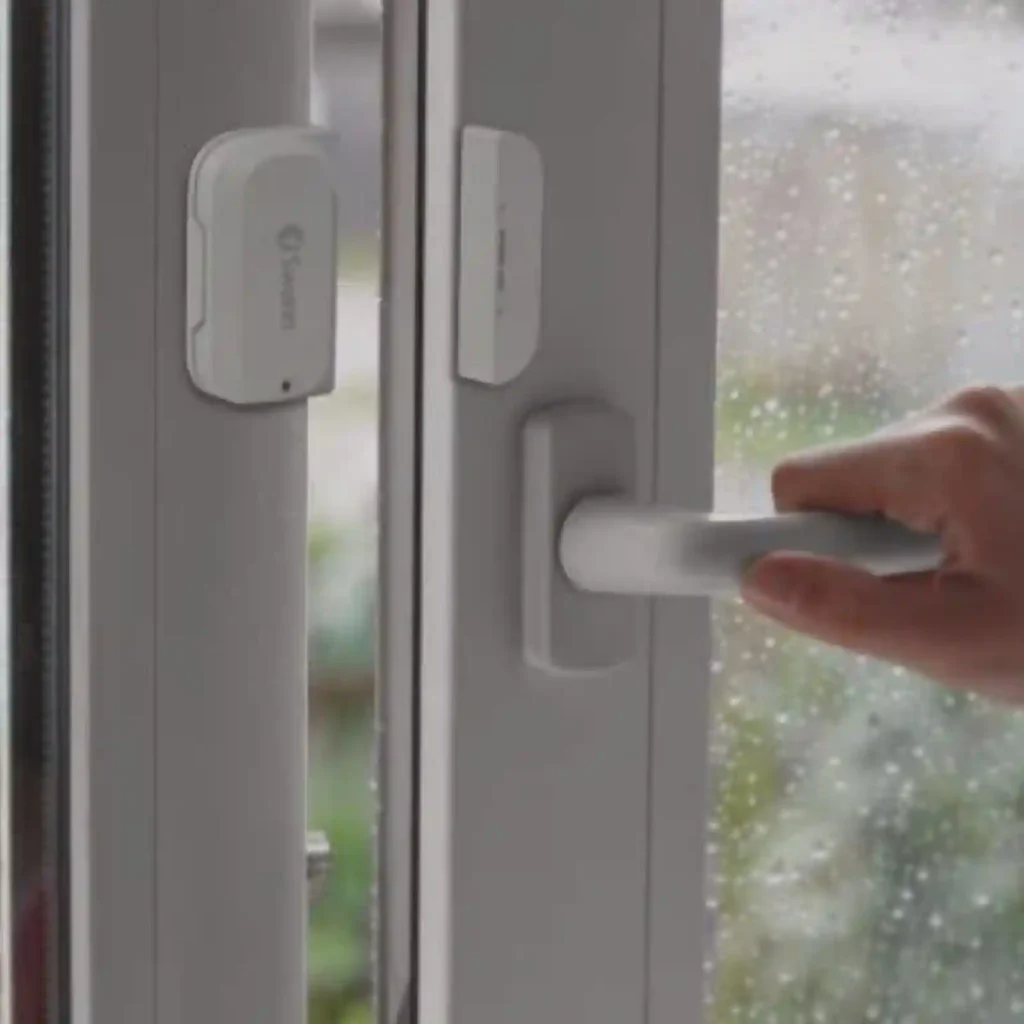
- Magnetic contact sensors use two parts. A magnet sits on the moving window pane, and a sensor sits on the frame. When the window is closed, the two are aligned. When the window opens, the magnetic field breaks, triggering the alarm.
- Glass break detectors use a small microphone and signal processing to listen for the specific acoustic pattern of shattering glass.
- Vibration and shock sensors detect impacts from someone striking, prying, or forcing a window frame.
Wireless models communicate with a central panel or mobile app over Wi-Fi, Z-Wave, or Zigbee. Wired models connect directly to a security panel through low-voltage cabling.
Main Types of Window Alarms
- Magnetic contact sensors
The most common type. Small, affordable, and effective for any window that opens and closes.
- Glass break detectors
Cover a wider area than contact sensors. One unit can protect several nearby windows.
- Vibration and shock sensors
Useful for windows that would break rather than open under force, such as basement windows.
- Standalone battery-powered alarms
Simple stick-on units that chirp when a window opens. No monitoring, no app, no wiring.
- Wired window sensors
Hardwired into a central security panel. Reliable and low-maintenance, common in new construction.
- Wireless window sensors
Battery-powered and paired with a smart panel. Easier to retrofit than wired systems.
- Smart window sensors
Send alerts to your phone and integrate with smart home technology, letting you check window status remotely and combine alerts with lights, locks, and cameras.
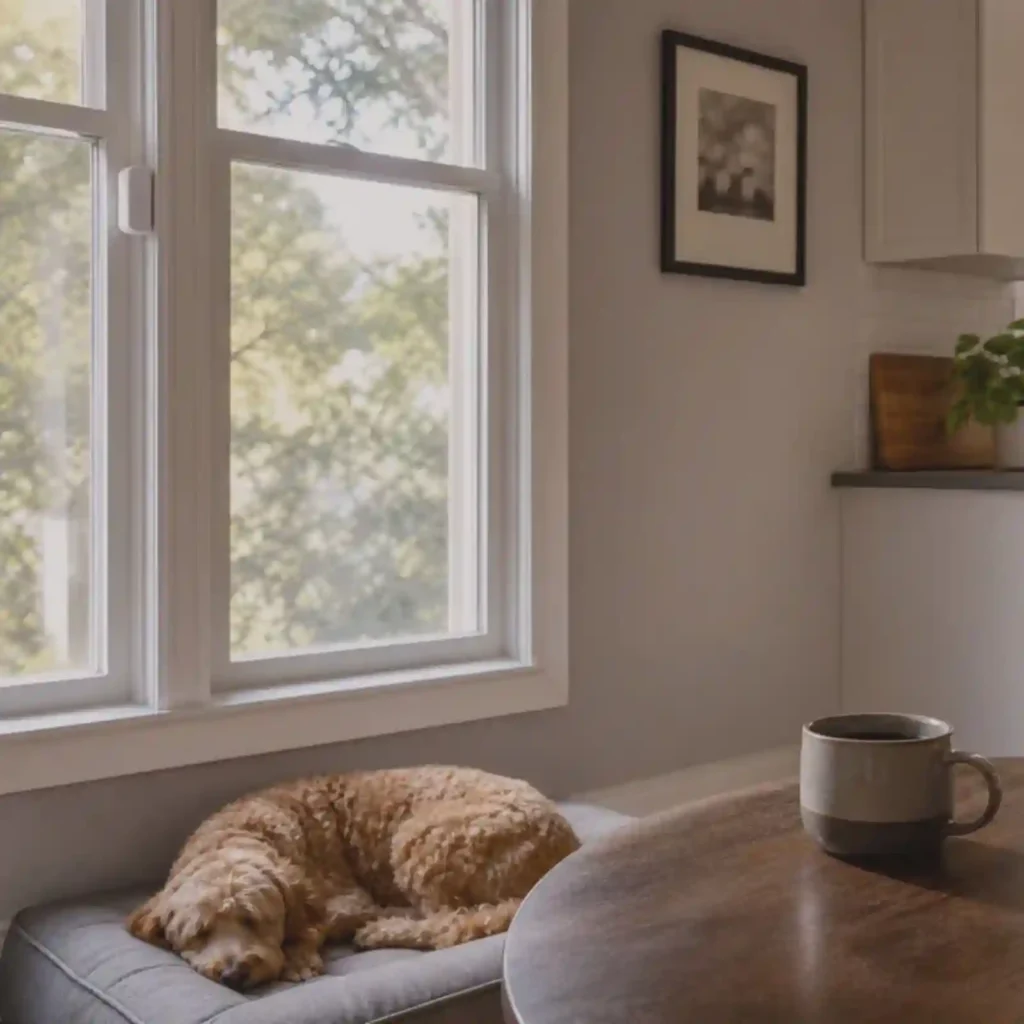
What Do Window Alarms Actually Protect Against?
Window alarms address a specific set of real scenarios:
- Forced entry through an unlocked or partially open window.
- Broken glass from someone attempting to reach in and unlock a window.
- Prying on window frames, tracks, or latches.
- Sliding glass door intrusion, common in Arizona homes.
- Children opening upper-floor windows unnoticed.
- Break-in attempts when a home is empty while traveling.
According to the FBI Uniform Crime Reporting program, burglary remains one of the most common property crimes in the United States. Window alarms are not a guarantee against every threat, but they close a gap that door locks alone cannot cover.
Which Type of Window Alarm Is Right for Your Home?
The right type depends on how each window is used and how it is likely to be attacked.
For ground-floor windows that open often, magnetic contact sensors are the practical baseline.
Fixed or rarely opened windows, where breakage is more likely than opening, glass-break detectors or vibration sensors are a better fit.
Sliding glass patio doors, a combination of a contact sensor on the moving panel and a glass-break detector nearby provides stronger coverage.
Basement or high-risk windows, layer vibration sensors on top of contact sensors.
Whole-home coverage, integrated wireless sensors tied into a professional home security system usually beat a patchwork of standalone units.
Standalone vs Monitored Window Alarms
Standalone battery-powered alarms are inexpensive and easy to install. They chirp when a window opens. That is useful for basic awareness or for alerting you when a child opens a bedroom window, but no one will hear them if the house is empty.
Monitored window sensors connect to a central panel and a professional monitoring center. When triggered, they send an alert to your phone and to a monitoring team that can dispatch police even if you are on vacation.
For a family home, monitored coverage tied into a broader burglar alarm system with 24/7 monitoring is the stronger choice.
Where to Install Window Alarms in Your Home
Not every window carries equal risk. Focus first on:
- All ground-floor windows.
- Basement windows.
- Windows hidden by fences, hedges, or landscaping.
- Sliding glass patio doors.
- Windows near garage side doors or utility rooms.
- Bedroom windows for family safety and awareness.
For upper floors, prioritize windows accessible from a low roof, balcony, or nearby tree. Skip upper windows that offer no realistic entry path.
Key Features to Look For
When comparing window alarms, watch for:
- Long battery life (two years or more for quality wireless units).
- Tamper detection that alerts if a sensor is removed.
- Wireless range that covers your whole home.
- Mobile app integration for real-time alerts.
- Chime and alarm mode options.
- Adjust glass-break sensitivity to reduce false alarms.
- Compatibility with your existing security panel or smart home platform.
- Backup power in case Wi-Fi or electricity is disrupted.
Professionally installed and monitored systems that follow industry standards, including those recognized by the Electronic Security Association, tend to be more reliable than mixed-brand DIY setups.
Window Alarms for Arizona Homes
Arizona homes have some specific characteristics worth planning around.
Single-story layouts common across the state mean more ground-floor windows to cover per home. Sliding glass patio doors are almost standard. Many owners travel or spend part of the year out of state, leaving houses empty for weeks or months at a time.
Dust, heat, and dry conditions can shorten sensor battery life and affect adhesive mounts over time, so choose sensors rated for the temperature ranges typical of Arizona summers, and test them a few times per year.
For snowbird homes and long-term travelers, professional monitoring is often the difference between a break-in caught in real time and one discovered weeks later.
How Window Alarms Fit Into a Complete Home Security System
Window sensors work best as part of a coordinated setup, not on their own. A complete system typically includes:
- Door and window contact sensors.
- Motion sensors inside key rooms.
- Glass break detectors near large windows.
- Indoor and outdoor cameras with video surveillance for visual verification.
- A control panel or smart hub.
- Professional 24/7 monitoring for real-time response.
When these pieces communicate, an event at one window can trigger lights, camera recording, mobile alerts, and a monitoring response simultaneously. That coordinated reaction is what closes the gap between “the window opened” and “someone is being dispatched.”
Why Work With Titan Alarm & Fire
At Titan Alarm & Fire, we help Arizona homeowners plan window security as part of a full home protection strategy, not as an afterthought. Our team designs systems that integrate door and window sensors, glass-break detectors, cameras, and professional monitoring into a single, integrated setup.
Every home is different. A Phoenix ranch with a wall of patio doors, a Tucson two-story with basement windows, and a Scottsdale vacation home used four months a year each need a slightly different mix. We help homeowners choose the right combination for their layout and lifestyle, with practical Arizona home security advice built on decades of local experience.
Final Thoughts
Window alarms are one of the most practical layers of home security you can add. They close a specific gap that locks and door sensors cannot cover, and they scale from a single stick-on chime to a fully monitored system integrated with cameras and smart home controls.
The right type depends on your windows, your habits, and how the home is used when you are not there. For Arizona homeowners ready to upgrade their window security or build a fully integrated system, contact Titan Alarm & Fire for a quick conversation to determine what best fits your home.
FAQs
What are window alarms and how do they work?
Window alarms are sensors placed on or near a window that detect when it is opened, broken, or tampered with. They use magnetic contacts, glass break detection, or vibration sensing to trigger a chime, a mobile alert, or a monitored response.
Are window alarms worth it?
Yes, for most homeowners. They close a common security gap between locks and door sensors, and monitored versions add professional response even when you are away.
Do window alarms need Wi-Fi?
Standalone battery-powered alarms do not need Wi-Fi. Smart sensors that send phone alerts or connect to a monitoring service usually rely on Wi-Fi with a cellular backup.
Can window alarms detect broken glass?
Yes. Glass break detectors listen for the acoustic pattern of shattering glass and can cover several nearby windows from one location. Standard contact sensors alone do not detect breakage.
Should every window in the house have an alarm?
Not necessarily. Focus on ground-floor windows, basement windows, sliding doors, and any window hidden from view. Upper-floor windows without a realistic entry path can usually be skipped.