
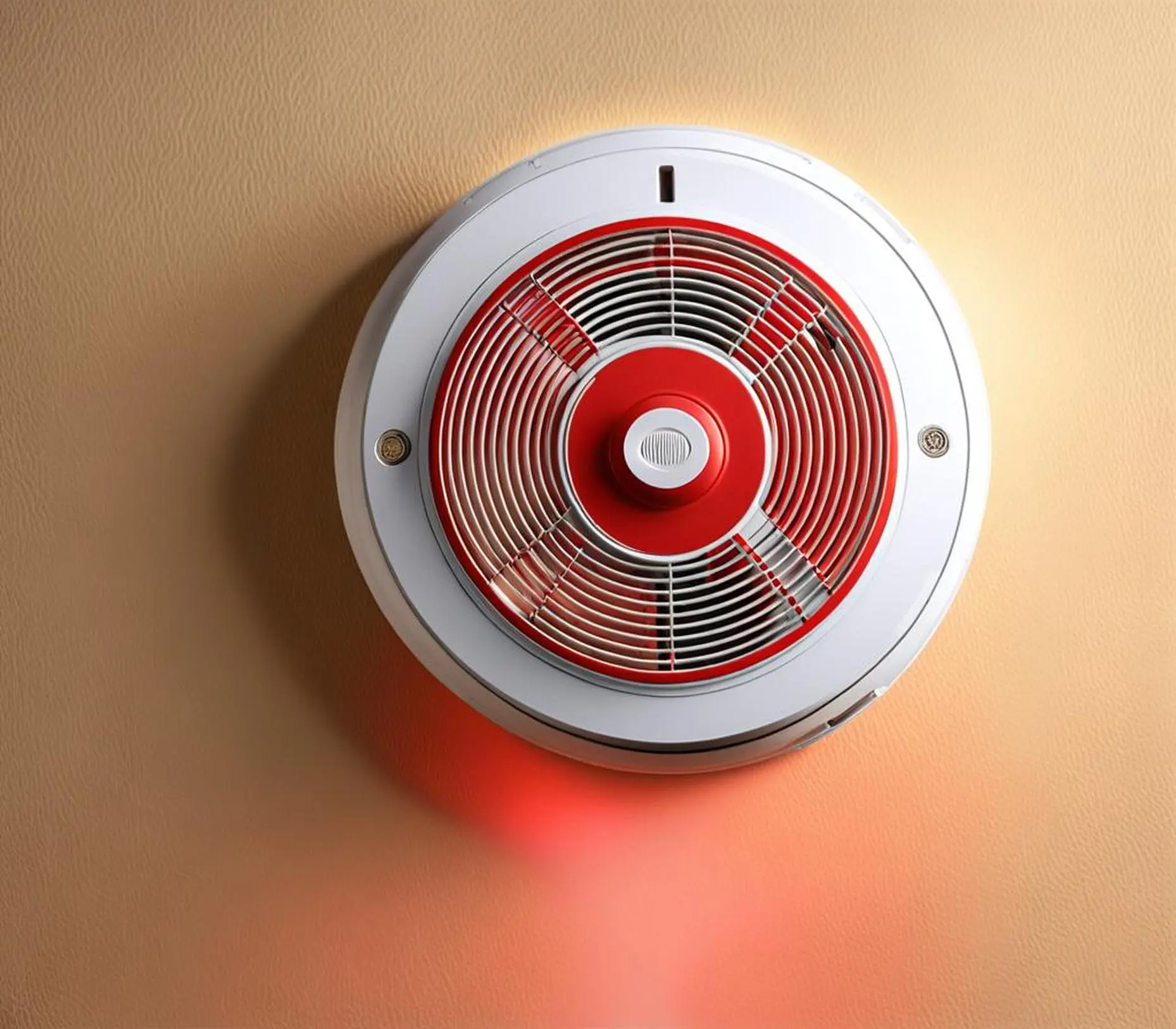
A red light on smoke detector devices usually signals one of three things. A brief blink every 30 to 60 seconds means the alarm is working normally. A quick blink or chirp often indicates a low battery or end of life. A solid red light with a loud, continuous alarm indicates that smoke has been detected, and you should treat it as an emergency.
You are heading to bed, the house is quiet, and a small red light on the ceiling catches your eye. Is the alarm working? Is the battery dying? Did it just go off?
This guide explains how to read common signals, safely reset the detector, and determine whether it needs a battery change, inspection, or complete replacement.
What Does a Red Light on a Smoke Detector Mean?
Every modern smoke alarm uses a small LED to communicate. The color and pattern indicate the device’s state, even when the alarm is silent.
A short red blink at regular intervals is a status signal. It confirms the unit is powered and running its self-check. Faster blinks, steady lights, or chirping sounds usually mean something needs attention.
Manufacturers use slightly different codes, so the exact pattern for a low-battery or triggered alarm can vary. When in doubt, check the user manual for your specific model. Most manufacturers publish these online.
| Important: LED patterns are model-specific. Check the label or user manual before treating a light pattern as a universal code. |
How to Read the Red Light
Observe three details: how quickly the light flashes, whether the detector is silent or sounding, and whether an alarm occurred recently.
| Light or sound pattern | Possible meaning | What to do |
| Brief flash every 30–60 seconds. | Normal standby on many models. | Test the detector and check its manual. |
| Rapid flashing with loud alarm. | Smoke detection or initiating alarm. | Evacuate and call 911. |
| Flashing after the alarm stops. | Alarm or latch memory. | Check for hazards, then reset. |
| Flash with one periodic chirp. | Low battery on many models. | Replace the approved battery and test. |
| Repeated chirps with flashing. | Malfunction or end-of-life warning. | Check the model-specific chirp code. |
| Persistent light without sound. | Memory, hush mode, or fault. | Inspect and follow reset instructions. |
The pattern matters more than the color alone because manufacturers assign LED colors differently.
Solid Red Light vs Blinking Red Light: What Is the Difference?
A blinking red light is almost always a status indicator. Short blinks at long intervals confirm the alarm is on and that self-checking is in progress. Some models use a green LED for this instead, which is why you may see green on one unit and red on another in the same home.
A solid red light is different. When paired with a loud continuous alarm sound, it means the device has actively detected smoke. Get everyone out, stay out, and call 911.
If the light is solid but there is no alarm sound and no smoke, the unit may be stuck in an error state. Try a reset. If that fails, replace it.
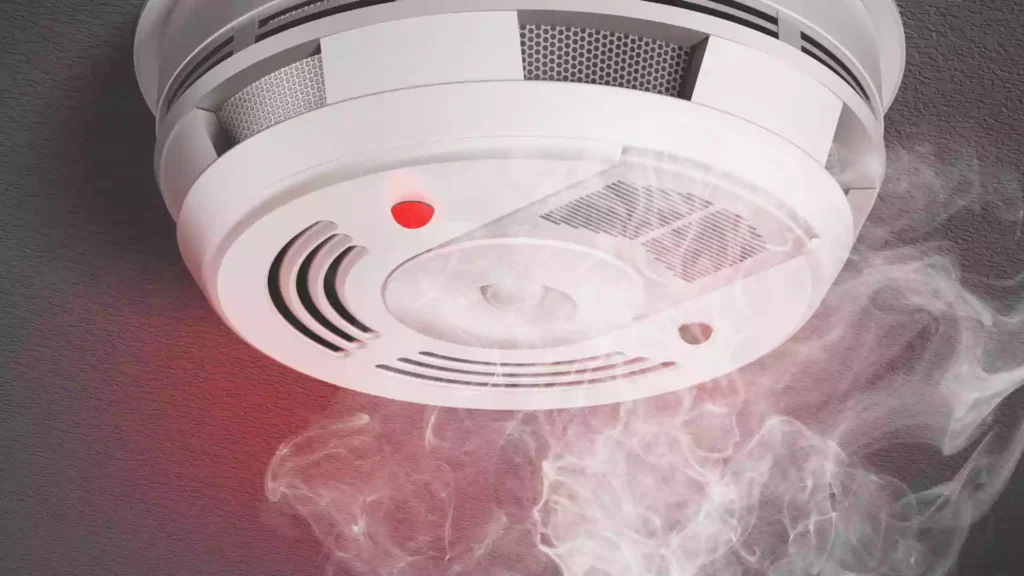
What Does a Red Light With Chirping Mean?
A maintenance chirp differs from a loud emergency alarm. Note its volume, timing, and repetition.
- One Chirp Every 30 to 60 Seconds
On many replaceable-battery alarms, one periodic chirp indicates a low battery. Kidde also lists a loose battery, incorrect installation, malfunction, hush mode, and end-of-life status among the possible causes of smoke alarm chirping.
Install the battery type specified in the manual, confirm the polarity, close the compartment, and test the detector.
- Three Loud Beeps Followed by a Pause
Three full-volume beeps followed by a pause commonly indicate a smoke emergency. Do not confuse three loud repeating beeps with brief maintenance chirps. On some models, periodic groups of chirps signal a malfunction or end-of-life condition. Compare the timing with the manual.
How to Reset a Smoke Detector With a Red Light
Reset the detector only after ruling out an active fire. The procedure depends on whether it is battery-operated, hardwired, or powered by a sealed battery.
Reset a Battery-Powered Detector
- Remove the detector from its mounting plate.
- Remove the battery.
- Hold the Test button for 15 to 30 seconds if the manual instructs you to discharge residual power.
- Install a fresh approved battery.
- Close the compartment and reattach the detector.
- Hold the Test button until the horn sounds.
Do not attempt to remove the power cell from a sealed ten-year alarm. Replace the entire detector when a sealed model reaches end of life.
Reset a Hardwired Detector
- Turn off the alarm circuit at the main breaker.
- Remove the detector from its bracket.
- Disconnect the quick-connect harness.
- Remove the backup battery if it is replaceable.
- Hold the Test button for 15 to 30 seconds when the manual specifies a power cycle.
- Reconnect the battery and harness.
- Reattach the detector and restore power.
- Test the detector and interconnected alarms.
Never touch exposed wiring or force an incompatible connector. Contact a qualified electrician or professional fire alarm installation provider when rewiring is required.
What If the Red Light Will Not Reset?
A continuing light does not automatically mean failure. Confirm that the battery is correct and properly installed, the drawer is closed, the alarm is secured to its bracket, and any hardwired connector is seated. Check whether the pattern represents standby or alarm memory. Clean dusty vents only as the manufacturer directs.
If a confirmed fault remains after approved troubleshooting, schedule fire alarm service and maintenance or replace the unit.
When Should You Replace a Smoke Detector?
The National Fire Protection Association advises homeowners to replace smoke alarms every 10 years, based on the manufacture date printed on the unit.
Replace the detector when:
- It is ten years old or has reached its stated service life.
- It fails the Test-button check.
- It produces a confirmed end-of-life warning.
- A malfunction continues after troubleshooting.
- The housing or sensor is damaged or painted over.
- The unit is included in a manufacturer recall.
- Its age cannot be identified, and it appears outdated.
A successful button test does not cancel the ten-year replacement interval.
How to Replace the Smoke Detector
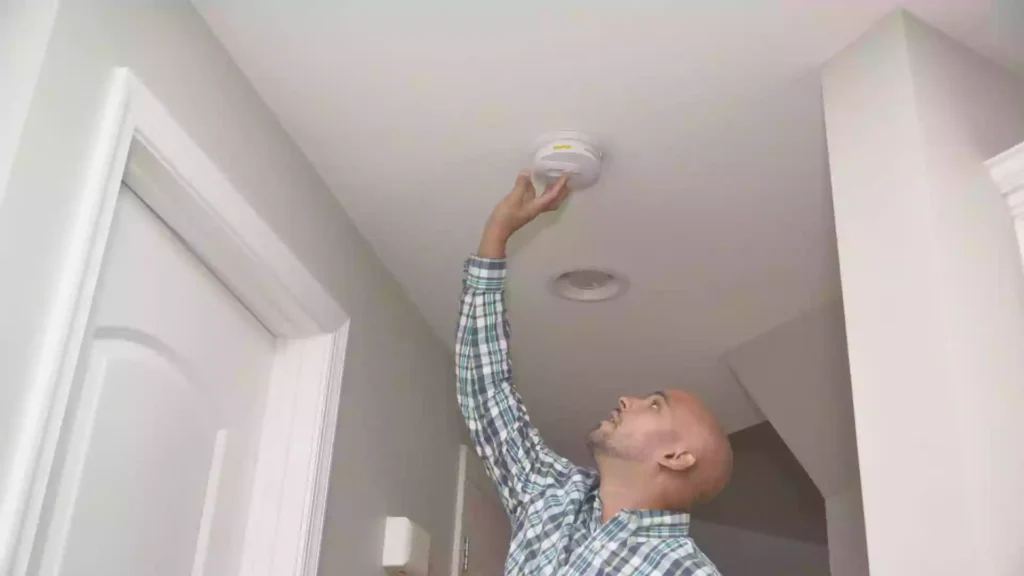
For a battery-powered unit, remove the old alarm and incompatible mounting plate, install the bracket supplied with the replacement, activate or insert the battery, attach the new detector, and test it. Record the installation date.
For a hardwired detector:
- Switch off the correct circuit breaker.
- Remove the alarm and disconnect its harness.
- Confirm that the replacement is compatible with the connector and interconnected network.
- Install the approved bracket, harness, or conversion adapter.
- Connect and mount the new detector.
- Install its backup battery.
- Restore power and test every interconnected unit.
The same brand may simplify replacement but does not guarantee compatibility. Never force a connector or splice wiring without the required electrical expertise.
How Monitored Smoke Detection Adds Protection
A standalone detector alerts people who are close enough to hear it. A connected fire alarm system can expand protection through interconnected detection, remote notification, and professional response.
With 24/7 fire alarm monitoring, an alarm signal can be sent to a staffed monitoring center when a connected system detects a hazard. Modern smart home technology may also provide mobile alerts and integration with other security devices.
Monitoring adds awareness when no one is home, but it does not replace working local alarms, monthly testing, or a practiced escape plan.
Smoke Alarm Safety Tips for Arizona Homes
Arizona homes face a specific mix of fire risks. Dry conditions, extreme summer heat, dust that settles fast, and areas near wildland zones all add up. A few practical habits go a long way:
- Test every smoke alarm monthly using the test button.
- Replace batteries at least once a year, or install sealed 10-year units.
- Vacuum smoke detectors during monthly HVAC maintenance to prevent dust-related false alarms.
- Keep at least one alarm on every level, inside every bedroom, and outside every sleeping area.
- Pair smoke detection with carbon monoxide detection for full life safety coverage.
For homes in higher-risk areas or families that travel often, 24/7 monitoring adds a layer of professional backup that unmonitored alarms cannot match.
When to Call a Fire-Alarm Professional
Some situations go beyond a battery swap. Consider calling a professional if:
- Your alarms are hardwired and behaving inconsistently.
- Multiple alarms sound at once with no clear source.
- Your alarms are more than 10 years old, or the model is unknown.
- You want to upgrade from standalone alarms to a fully monitored system.
- You are building, remodeling, or expanding your home security setup.
A qualified provider can inspect your existing alarms, recommend the right mix of hardwired and interconnected units, and integrate fire detection into a broader home security system.
Titan Alarm & Fire provides fire alarm testing and inspection, installation, monitoring, and maintenance services across Arizona. A professional can evaluate detector placement, wiring, interconnection, and system condition before recommending repair or replacement.
Final Thoughts
A red light on a smoke detector is a status message, but its meaning depends on the flash pattern, accompanying sound, recent alarm activity, and model.
A slow flash may mean normal standby. Rapid flashing with a loud alarm may indicate smoke. A periodic chirp may signal a weak battery, a malfunction, or end-of-life. A continuing flash after an event may simply be alarm memory.
Check the manual, test every detector monthly, and replace it at ten years or sooner if it fails testing or displays an unresolved fault.
FAQs
Is a red flash every 30 to 60 seconds normal?
It is normal on many models, but the light alone does not confirm full operation. Use the Test button.
Why is the light blinking after I changed the battery?
The unit may need a reset, may be displaying alarm memory, or may have reached end of life. Check battery installation and follow the manual.
Should I replace the detector if the red light will not stop?
Replace it when the manual identifies the signal as a fault or end-of-life warning that remains after troubleshooting. Do not replace it solely for a normal standby flash.
How often should smoke detectors be replaced?
Most smoke alarms should be replaced every ten years, or sooner if they fail testing, become damaged, or produce a confirmed end-of-life warning.