

A red light on a smoke detector may mean normal operation, power status, alarm memory, hush mode, low battery, a sensor issue, or an active alarm condition. The exact meaning depends on the smoke detector model and light pattern. If the alarm is sounding or there are signs of smoke or fire, leave the home and call emergency services.
You walk into the kitchen, glance up, and notice a small red light blinking on the smoke detector. The alarm is silent. There is no smoke. Nothing seems wrong. But the light keeps flashing, and now you are not sure if you should worry, change the battery, or just leave it alone.
A red light on smoke detector units is one of the most common questions homeowners ask. The honest answer is that it depends.
This guide walks you through what the red light may mean, what to check, when it is fine, and when you should take it seriously.
What Does a Red Light on a Smoke Detector Mean?
The red light is the most common indicator LED on a smoke alarm. Manufacturers use it to communicate several different things, and the meaning shifts based on the blink rate, whether the alarm is sounding, and whether the unit also chirps.
In general, the red light can mean one of the following:
- Normal operation: A short red blink every 30 to 60 seconds often means the alarm is powered and working. On many models, this is the default healthy signal.
- Alarm memory: Some detectors blink red after they have triggered an alarm, so you can identify which unit detected smoke earlier.
- Battery warning: A blink combined with a chirp usually means the battery is low.
- Sensor issue or end of life: A different pattern, often accompanied by chirping, can indicate that the sensor is dirty, faulty, or that the unit has reached the end of its service life.
- Active alarm: A rapid red flash while the alarm is sounding usually means that the unit is currently detecting smoke.
Check your detector manual if the light pattern is unusual.
Why Is My Smoke Detector Blinking Red?
On many smoke detector models, a slow red blink can be a normal status signal.
A different blink rate can mean something else. Faster blinking, or blinking combined with a chirp, may indicate a battery warning, a sensor problem, or an alarm memory from a recent event. Rapid red flashing with a loud alarm usually identifies the unit that sensed smoke, especially in an interconnected system where all alarms sound together, but only one is the source.
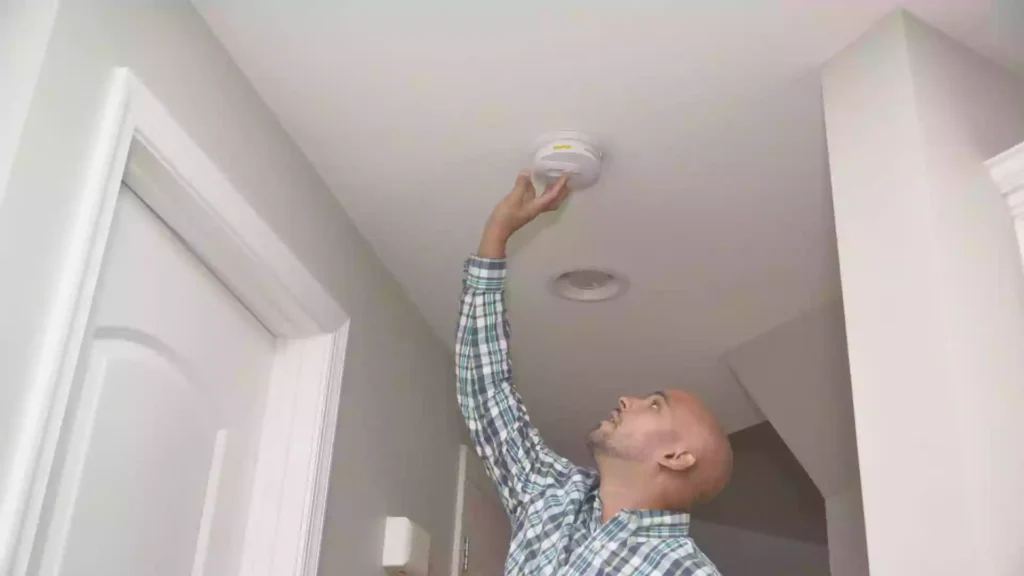
So a blinking red light is rarely a reason to panic, but it is always worth a quick check. The questions to ask are simple: How fast is it blinking? Is it making any sound? Is anything different about the room, like cooking smoke, steam, or dust?
Red Light on Smoke Detector With No Sound
If the red light is blinking and the alarm is silent, the most common explanation is that the detector is operating normally. Many smoke alarms blink a status LED every 30 to 60 seconds while powered.
That said, a red light with no sound can also mean a few other things:
- The detector is in alarm memory mode, showing that it triggered earlier, even though the alarm has stopped.
- The unit is in hush mode after you silenced a recent alarm.
- The unit silently signals an issue before it begins to chirp.
If the light is steady, very rapid, or behaving differently from usual, check the manual. Press the test button to confirm the alarm still sounds correctly. Look at the back of the unit for a manufacturer’s date. If the alarm is more than ten years old, replacement is usually recommended regardless of how it looks or sounds.
A silent red light is not a reason to ignore the detector. It is a reason to verify it is still doing its job.
Red Light on Smoke Detector With Chirping or Beeping
A red light paired with regular chirping is a different signal. The detector is asking for attention.
The most common causes include:
- Low battery: A chirp every 30 to 60 seconds is the classic sign of a battery nearing the end of its charge.
- Battery drawer not fully seated: On some models, the alarm chirps if the battery compartment is open or loose.
- Dust or debris near the sensor: Dust buildup can trigger false readings and irregular signals, which are more common in dry, dusty Arizona homes.
- End-of-life warning: Smoke alarms have a service life, usually around ten years. When that life is reached, many detectors chirp and flash even with a fresh battery.
- Sensor fault or malfunction: Some chirp patterns indicate the sensor itself is no longer reliable.
Do not ignore repeated chirping. If a battery change does not stop it, the detector may be at the end of its life or signaling a fault, and it should be replaced or inspected.
Red Light During an Active Alarm
If the alarm is sounding and the red light is flashing rapidly, treat it as a real alarm until you can confirm otherwise.
In an interconnected smoke alarm system, all alarms sound together when any single unit detects smoke. The rapidly flashing red light usually indicates which unit detected the smoke first.
Safe action steps if your alarm is sounding:
- Leave the home: Get everyone out and away from the building.
- Do not stop to investigate if there is visible smoke, heat, a fire smell, or any uncertainty.
- Call 911 from outside the home, even if you are unsure whether it is a real fire.
- Do not re-enter until the fire department clears the building.
If the alarm is sounding because of cooking smoke or shower steam, and you are certain there is no fire, you can ventilate the area, but the safer default is always to leave first and verify second.
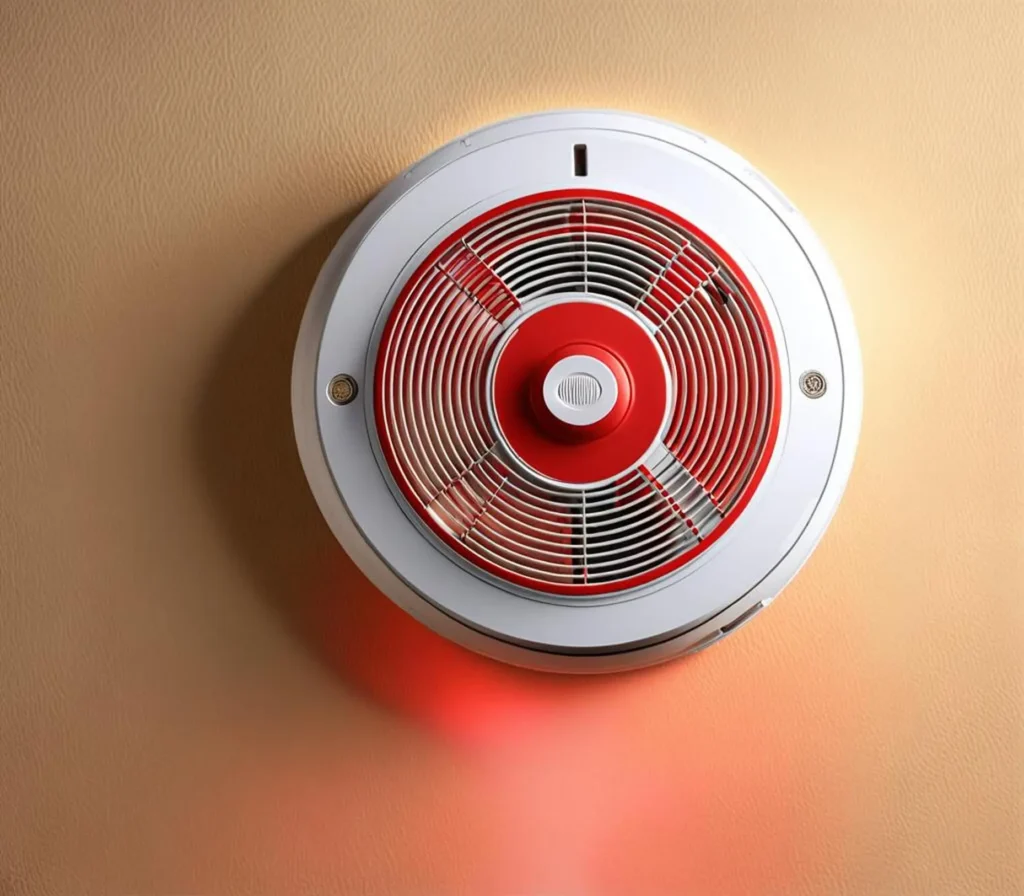
Quick Reference: Red Light Patterns & Possible Meanings
Patterns vary by brand and model. Always confirm with your detector’s manual.
| Red Light Pattern | Possible Meaning | What to Do |
|---|---|---|
| Short blink every 30 to 60 seconds, no sound | Normal power/status indicator | Leave it alone, test monthly |
| Slow blink with chirp every 30 to 60 seconds | Low battery or end-of-life warning | Replace the battery; if it continues, replace the unit |
| Steady or unusual blink, no sound | Alarm memory or hush mode | Check the manual, test the unit |
| Rapid flashing with an alarm sounding | Active smoke detection | Leave the home, call 911 |
| Red light after cooking smoke clears | Recent alarm memory | Ventilate, test the unit, reset per the manual |
| Red light plus chirp after battery change | End-of-life warning or fault | Replace the detector |
If your pattern does not match any of these, check the model number on the back of the unit and look up the manufacturer’s indicator guide. Never assume.
Common Causes of a Smoke Detector Blinking Red
Here are the most common reasons for a blinking red smoke alarm, in plain language:
- Normal power indicator: Most modern alarms blink red to show they have power. This is the default.
- Recent alarm memory: The unit triggered earlier and is showing you which one it was.
- Test mode: A test was run recently, and the LED is still in test indication.
- Hush or silence mode: A temporary state after the silence button is pressed.
- Low battery: Voltage has dropped below the threshold the detector needs.
- Dust or debris near the sensor: A dusty sensor can cause irregular readings, especially in the Arizona summer.
- Cooking smoke or steam: Bathroom steam and kitchen smoke can trigger short alarms or alarm memory.
- End-of-life warning: The unit has exceeded its safe service life.
- Malfunction: The internal sensor or circuit is no longer functioning correctly.
- Interconnected alarm signal: One unit in a linked system is communicating an alarm condition to the others.
When Should You Call a Professional?
There are situations where a homeowner fix is enough, and there are situations where calling someone in is the right move.
You should call a professional if:
- The detector is hardwired into your home’s electrical system.
- The alarms are interconnected, and you cannot identify the source.
- You are getting recurring false alarms with no obvious cause.
- The alarm fails to respond to testing.
- The red light keeps blinking and chirping after a battery replacement.
- The unit is older than ten years or has no readable date.
- Your home has a monitored alarm system tied to a central station.
- You manage a rental, vacation home, or multi-unit property where consistent smoke detection is required by law.
A licensed installer can test the full system, replace failing units, confirm that the interconnection works, and verify that monitoring is active. That is faster and safer than guessing.
Why Arizona Homeowners Should Take Smoke Detector Issues Seriously
Arizona homes have a few specific conditions that affect smoke detectors more than people realize.
Dust is a constant factor. Dry desert air, monsoon dust, and HVAC airflow can all push fine particles toward ceiling-mounted sensors, which leads to nuisance alarms and irregular signals. Heat can also shorten battery life faster than in cooler climates, especially in garages and attics where some alarms are installed.
Reliable smoke detection, paired with alarm monitoring, solves much of that. A monitored system makes sure a fire signal is acted on, whether or not anyone is home to hear the alarm.
Final Thoughts
A red light on a smoke detector is often normal, but it depends on the blink pattern, sound, and detector model. But the same red light can also signal a battery issue, a sensor fault, an alarm memory, or an active fire condition, and the only safe way to know which one is to check the pattern, listen for sound, and consult the manual.
If the alarm is sounding, leave the home and call 911. If the light is blinking with no sound, run through the checklist above. If anything feels off, or the system is hardwired or monitored, call a professional.
If you are in Arizona and want a smoke detector or fire alarm system you can actually trust, contact Titan Alarm & Fire for an inspection or installation walk-through.
FAQs
Is a red light on a smoke detector normal?
Often yes. Many smoke detectors blink a red status light every 30 to 60 seconds to show they are powered and working. Check the manual or label on your unit to confirm your specific model’s normal pattern.
What does a red light and a chirping sound mean?
A red light with a steady chirp usually means a low battery or end-of-life warning. Replace the battery first. If the chirping continues, the unit may need to be replaced. Hardwired units should be handled by a licensed professional.
Should I press the test button if my smoke detector is blinking red?
Yes. The test button is the safest way to confirm the alarm still sounds correctly. If the alarm does not sound when tested, replace the unit or call a professional.
When should I replace my smoke detector?
Replace your detector if it is older than ten years, has a missing or unreadable label, fails the test button, continues to chirp after a battery change, or shows visible damage or yellowing. Hardwired and monitored units should be replaced by a professional.
Who should I call if my smoke detector keeps blinking red?
If the unit is battery-powered and a fresh battery does not resolve the issue, replace the detector. If the alarm is hardwired, interconnected, or part of a monitored system, call a licensed fire alarm professional, such as Titan Alarm & Fire in Arizona.