

Yes, steam can set off a fire alarm. Hot showers, boiling water, and high humidity can trigger certain smoke detectors even without a fire. This happens when tiny water droplets enter the detector’s sensing chamber and affect its ability to detect smoke.
Smoke alarms near bathrooms, kitchens, or other humid areas are more likely to experience these unwanted activations. Poor ventilation, condensation, and improper detector placement can make the problem worse.
Better ventilation, correct smoke alarm placement, and regular maintenance can help prevent steam-related false alarms. However, always treat a sounding fire alarm as a possible emergency until you can safely rule out a fire.
Can Steam Really Set Off a Fire Alarm?
Yes. Steam can activate residential smoke alarms and smoke detectors connected to commercial fire alarm systems. However, not every detector responds to moisture in the same way. The U.S. Fire Administration confirms that shower steam can activate smoke alarms. It also warns homeowners never to remove batteries or disable alarms to stop unwanted activations. A steam-related activation is called a nuisance alarm. It means the detector responded to something other than a fire. Still, you must check the situation safely instead of assuming every alarm near a bathroom is false.
Why Does Steam Trigger a Smoke Detector?
Steam can trigger a smoke detector because airborne moisture droplets can interfere with the device’s sensing technology.
Most residential smoke alarms use photoelectric, ionization, or dual-sensor detection. These technologies respond to particles differently.
1. Photoelectric smoke detectors
Photoelectric smoke detectors use a light source and a sensor inside a small chamber. When smoke enters the chamber, particles scatter light toward the sensor. If enough light reaches it, the alarm activates. Visible shower steam contains tiny water droplets that can also scatter light. When dense moisture enters the chamber, the detector may respond even without smoke.
2. Ionization smoke detectors
Ionization smoke detectors use a tiny, sealed radioactive source to create an electrical current inside the sensing chamber. Smoke particles disrupt this current and trigger the alarm. Under certain conditions, dense moisture can also affect the detector and cause an unwanted activation.
3. Dual-sensor smoke detectors
Dual-sensor alarms combine photoelectric and ionization technologies in one device.
They can detect different types of fire, but they are not immune to nuisance alarms. Heavy steam or condensation can still interfere with their operation.
4. High humidity and condensation
Even without visible steam, high humidity can create moisture problems. When warm, humid air meets a colder surface, condensation can form inside or around a detector. This moisture can interfere with its sensing chamber. Some research suggests that high humidity, sudden temperature changes, and condensation can contribute to unwanted alarms.

Why Does My Smoke Alarm Go Off After a Shower?
A smoke alarm that sounds during or shortly after a hot shower may be reacting to moist air escaping from the bathroom.
The following conditions are common causes.
- Excessive steam from hot showers
Long, hot showers can fill a bathroom with warm, humid air. When the door opens, that moisture moves into nearby hallways and bedrooms.
If a smoke detector is directly in the path of escaping steam, the moisture can reach its sensing chamber and cause an unwanted alarm.
- Poor bathroom ventilation
Bathrooms without effective exhaust fans can hold moisture long after a shower ends.
If the fan is blocked, broken, or unable to remove enough humid air, steam can spread into surrounding rooms.
A properly working exhaust fan that vents outdoors helps reduce this buildup.
- Smoke detectors installed too close to bathrooms
A smoke detector positioned directly outside a bathroom door may receive a concentrated burst of moisture whenever someone opens the door.
Repeated exposure increases the chance of nuisance alarms. Reviewing the detector’s location can help identify whether placement is contributing to the problem.
- Condensation and temperature changes
Warm bathroom air can meet colder surfaces near a smoke detector and cause condensation.
If alarms repeatedly activate during these temperature changes, the detector’s location and condition need to be checked.
However, moisture is not the only possible cause. Dust, insects, aging equipment, and electrical faults can also produce unwanted alarms.
For other possible causes, read our guide on why your fire alarm goes off randomly.
What Should You Do If Steam Sets Off Your Fire Alarm?
If a smoke alarm sounds during or after a shower, treat it as a possible fire until you have safely established the cause.
Follow these steps without disabling the alarm.
- Step 1: Check for signs of fire
Look for smoke, flames, unusual heat, or a burning smell only if it is safe to do so. If you notice danger or cannot confirm the area is safe, leave the building immediately and call 911 from outside.
Never delay evacuation to investigate an uncertain alarm.
- Step 2: Check whether steam is the likely cause
If there is no indication of fire and the situation is safe, consider whether the alarm sounded while someone was showering or immediately afterward. Check whether humid air has reached a nearby detector. The timing can provide a clue, but it does not prove the alarm is false.
- Step 3: Improve ventilation
Turn on the bathroom exhaust fan to remove moisture. Open a window where practical and safe. Allow the humid air to clear naturally rather than directing more steam toward the smoke detector.
- Step 4: Use the smoke alarm’s hush button
Many household smoke alarms include a temporary hush or silence feature.
Once you have safely confirmed a nuisance alarm, use this button according to the manufacturer’s instructions. Do not remove batteries, cover the detector, disconnect wiring, or disable the alarm.
- Step 5: Check whether the alarm returns to normal
After the moisture clears, the smoke alarm should return to its normal monitoring state. If it continues sounding, activates again, or displays a fault, follow the manufacturer’s instructions and arrange professional service when necessary.
For commercial or monitored fire alarm systems, follow the building’s emergency procedures. Only authorized personnel can operate or reset the fire alarm control panel.
How to Stop Steam From Setting Off a Smoke Alarm
The best way to prevent steam-related false alarms is to control moisture, maintain the detectors, and ensure they are installed in suitable locations.
1. Improve bathroom ventilation
Turn on the bathroom exhaust fan before a hot shower, and keep it running afterward until the moisture clears. A working fan helps remove humid air before it reaches nearby smoke detectors. If the bathroom stays damp for a long time, inspect the fan and ventilation path for problems.
2. Keep bathroom doors closed while showering
Closing the bathroom door during a shower can help stop steam from spreading into nearby rooms. Let the exhaust fan remove excess moisture before opening the door fully. This is especially helpful when a smoke detector is installed in the hallway outside the bathroom.
3. Check smoke alarm placement
Smoke alarm location plays an important role in preventing unwanted activations. For cooking appliances, NFPA generally recommends keeping household smoke alarms at least 10 feet from the stove, subject to applicable placement rules and exceptions.
These are different recommendations. Final placement must follow manufacturer instructions, required smoke alarm coverage, and local fire codes. Never move a detector to a location that leaves bedrooms, hallways, or required escape routes unprotected. Titan Alarm & Fire provides professional fire alarm installation services for Arizona homes and commercial properties.
4. Use kitchen and laundry ventilation
Steam can also build up in kitchens and laundry rooms.
Use a kitchen range hood that vents outdoors when cooking, especially when boiling large amounts of water. Conventional vented clothes dryers must exhaust moisture outdoors. A blocked or improperly connected vent can increase indoor humidity. Ventless dryers use different moisture-removal methods and must be maintained according to their instructions.
Proper ventilation in these spaces helps reduce unwanted moisture around nearby detectors.
5. Clean and maintain smoke detectors
Dust, insects, and other contaminants can interfere with smoke detector performance.
Follow the manufacturer’s cleaning instructions. Never spray water, cleaning chemicals, or compressed air into the sensing chamber unless the manufacturer specifically approves the method.
Test household smoke alarms every month. Most conventional models need replacement after 10 years, or earlier if the manufacturer requires it.
6. Arrange professional maintenance for recurring alarms
If the same smoke detector keeps going off after showers, even with proper ventilation, the problem needs further investigation. Repeated activations can indicate poor placement, condensation, contamination, or a faulty detector.
Professional fire alarm service and maintenance can help identify the cause and determine whether the equipment needs cleaning, repair, or replacement.
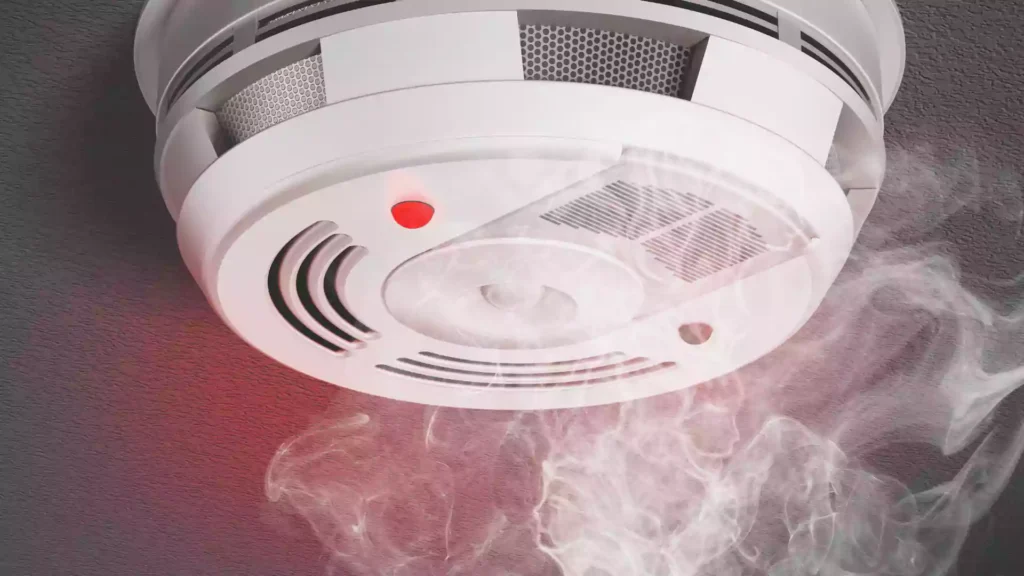
Which Types of Fire Detectors Can Steam Set Off?
Photoelectric and ionization smoke detectors can both experience steam-related nuisance alarms. Heat detectors operate differently because they respond to temperature rather than smoke particles.
| Detector type | How it works | Can steam trigger it? |
| Photoelectric smoke detector | Detects light scattered by airborne particles | Yes, dense moisture droplets can trigger it |
| Ionization smoke detector | Detects changes in electrical current | Yes, moisture can affect its sensing process |
| Dual-sensor smoke detector | Combines photoelectric and ionization detection | Yes, nuisance alarms remain possible |
| Heat detector | Responds to temperature conditions | Ordinary steam does not normally trigger it, but enough heat can |
How Can You Tell If an Alarm Is Caused by Steam or Another Problem?
Steam is only one possible reason for an unexpected fire alarm activation. The table below shows common clues and the safest next steps.
| Possible cause | Common signs | What to do |
| Shower steam | Alarm sounds during or after a hot shower | Rule out fire, then improve ventilation |
| Cooking smoke | Alarm activates during cooking | Check for fire and ventilate only when safe |
| High humidity | Repeated activation in damp conditions | Check moisture levels and detector location |
| Low battery | Periodic chirping rather than a full alarm | Follow the manufacturer’s battery instructions |
| Dust or contamination | Repeated alarms without an obvious cause | Clean the detector as instructed |
| Detector fault | Unexplained activations or fault signals | Arrange professional inspection |
Remember: A full smoke alarm and a low-battery chirp are different warnings.
Can Steam Trigger a Commercial Fire Alarm System?
Yes. Steam can activate smoke detectors connected to commercial fire alarm systems when enough moisture reaches the sensing chamber. This can happen in hotels, apartment buildings, gyms, locker rooms, and commercial facilities with showers or moisture-producing equipment.
Depending on the system configuration, one activated smoke detector can trigger building alarms and send a signal to a professional monitoring station. Recurring nuisance alarms can disrupt business operations and confuse building occupants.
Property managers can reduce these problems by reviewing ventilation, detector locations, maintenance records, and previous alarm events. Regular fire alarm testing and inspection can help identify system faults and equipment that needs professional attention.
When Should You Call a Fire Alarm Professional?
One confirmed steam-related nuisance alarm does not always mean the smoke detector is faulty. However, repeated activations need attention.
Contact a qualified fire alarm professional if:
- Your smoke alarm sounds every time someone takes a hot shower.
- The detector activates repeatedly without an obvious cause.
- Better ventilation does not prevent unwanted alarms.
- The smoke detector appears too close to a bathroom or moisture source.
- A hardwired or interconnected alarm system reports recurring problems.
- Your commercial fire alarm panel shows repeated alarms or faults.
- The detector fails its recommended test.
A professional can inspect the device, review its location, check the surrounding conditions, and determine whether maintenance or replacement is needed.
FAQs
Can boiling water trigger a smoke detector?
Yes. Boiling water can produce visible moisture droplets that may reach a nearby smoke detector and trigger an unwanted alarm. This is more likely with poor ventilation or when the detector is too close to the cooking area.
Can high humidity cause a fire alarm to go off?
Yes. High humidity can cause condensation inside or around some smoke detectors. This moisture can interfere with the sensing system and produce nuisance alarms. Repeated activations need investigation because dust, contamination, or equipment faults can cause similar problems.
How far should a smoke detector be from a bathroom?
NFPA’s installation guidance recommends at least 3 feet of horizontal separation between smoke alarms and bathroom doors. Greater separation can help reduce steam exposure where suitable. All placement changes must meet manufacturer instructions and applicable fire safety requirements.
Is it safe to cover a smoke detector while showering?
No. Covering a smoke detector prevents it from working correctly and can delay fire warnings. Never use tape, plastic bags, shower caps, or other materials to block an alarm. Instead, improve bathroom ventilation or have a professional assess the detector location.
Get Professional Fire Alarm Support From Titan Alarm & Fire
Frequent steam-related alarms can point to poor detector placement, moisture buildup, or maintenance problems. Titan Alarm & Fire provides fire alarm systems and protection services for residential and commercial properties in Phoenix, Tucson, Mesa, and surrounding Arizona communities.
Our services include fire alarm installation, inspection, testing, maintenance, repair, and professional monitoring. Whether your system needs troubleshooting or you are planning a new installation, our team can help assess your property’s fire protection requirements. Contact Titan Alarm & Fire to schedule a professional fire alarm consultation.