
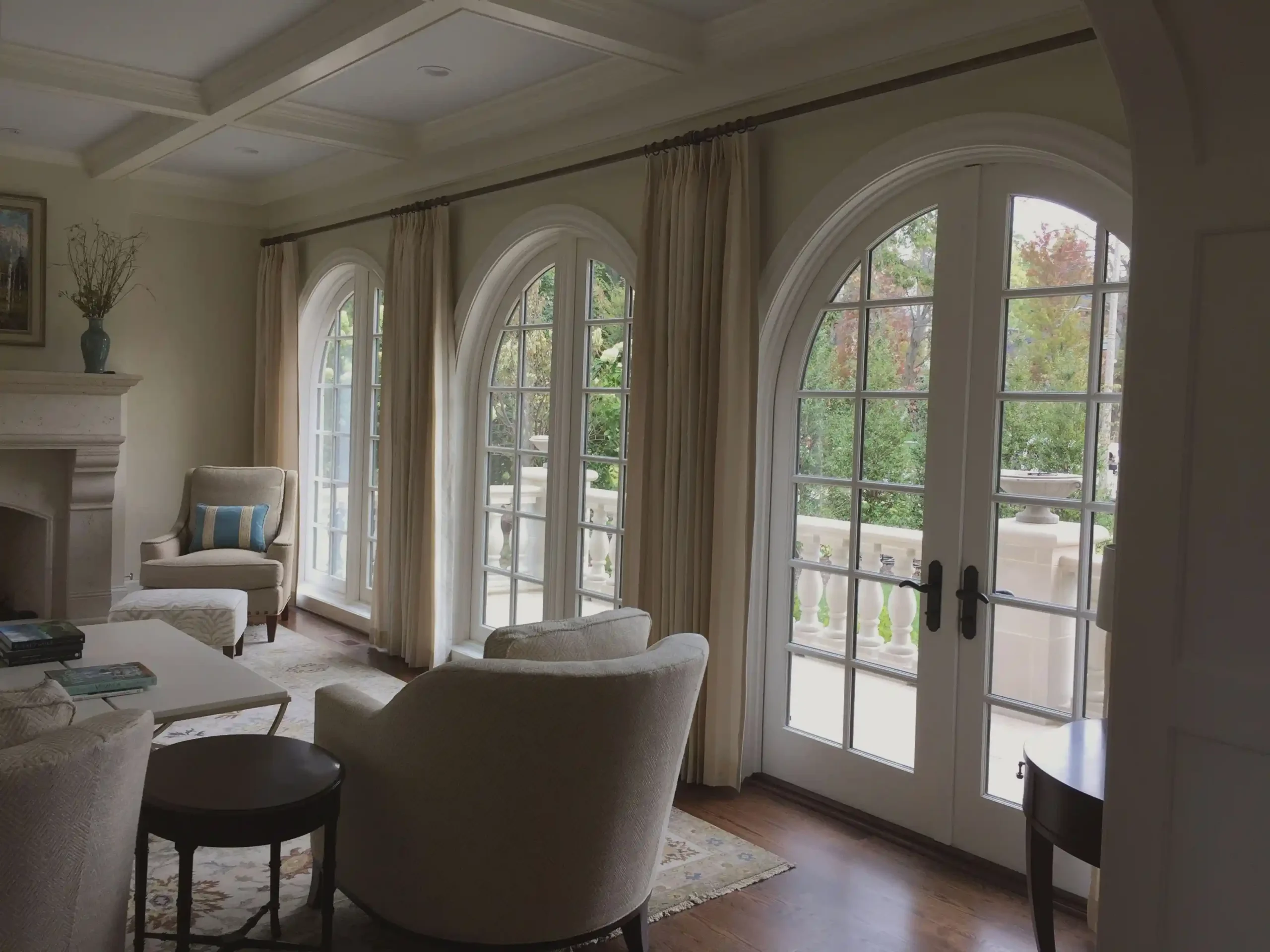
A strong lock matters, but patio door security should not stop at the latch. A rear entrance can also include a large glass panel, a hidden backyard approach, poor nighttime visibility, and no way to know when someone opens or damages the door.
A stronger security plan covers the whole entry point. Door sensors can detect openings. Glass-break sensors can detect breaking glass. Cameras can show activity outside. Better lighting can improve visibility. A monitored alarm system can connect these layers and provide another response path when you are away.
For Arizona homes with patios, side yards, block walls, or backyard gates, checking the area around the door can be just as important as checking the door itself.
How Can You Improve Patio Door Security Beyond the Lock?
Improve patio door security by adding several layers around the entrance. Use door sensors to detect opening, consider glass-break detection for large glass panels, improve camera coverage and lighting, keep important sightlines clear, secure backyard access, and connect compatible devices to a monitored home security system.
Each layer performs a different job. Together, they help protect the door itself and the area someone would use to reach it.
How Do Door Sensors Improve Patio Door Security?
A contact sensor can tell the security system when a patio door opens.
Most door contacts use two aligned parts. One mounts on the moving door, and the other on the frame. When the door opens, the two parts separate and the sensor reports the change to the security system.
Depending on the system and its configuration, that event may trigger an alarm, send a mobile alert, start another connected action, or report the alarm event to a monitoring service. The lock and sensor perform different jobs.
The lock resists entry. The sensor detects opening.
That distinction becomes especially useful when a patio door is out of sight from the main living area or nobody is home.
A contact sensor should also not be confused with a device designed to detect damage to the glass. A patio door can have an opening sensor and still benefit from another form of intrusion detection.
For a closer look at magnetic contacts, vibration sensors, and acoustic detection, read our guide on how window alarms work.
Should You Add Glass-Break Detection to a Patio Door?
Glass-break detection can add another security layer when a patio entrance contains a large glass surface.
A contact sensor normally responds when the door opens. An acoustic glass-break detector is designed to identify sound patterns associated with breaking glass.
The two devices therefore cover different events:
Door contact → door opens
Glass-break detector → breaking glass is detected
Some security systems may also use shock or vibration sensors that respond to impact against a door, frame, or glass surface.
The right detector depends on the property. Glass type, detector range, room layout, curtains, blinds, ceiling height, and manufacturer requirements can all affect where a device should be installed.
Select and position a sensor for the area it is expected to protect, not just because it is close to the patio door.
Can Security Film Strengthen Patio Door Glass?
Security window film can help hold broken glass together and add resistance to a glass panel, but it should not be treated as an unbreakable barrier.
Its role is mainly to add delay.
With the right film and attachment system, the glass may stay together longer after impact. That can make it more difficult to create a quick opening through the panel.
This added resistance can work alongside other security measures such as:
- Door sensors
- Glass-break detection
- Security cameras
- Alarm sirens
- Professional monitoring
The full glass assembly matters. Film type, attachment method, existing glass, frame condition, and installation can all affect performance.
For that reason, homeowners should be cautious of claims that security film makes ordinary patio glass burglar-proof. It should be one layer within a wider security plan.
Where Should Security Cameras Cover a Patio?
A useful patio camera should capture more than a small section of the door.
Start by asking one question:
How would someone reach this entrance?
Depending on the property, useful camera coverage may include:
- The patio door
- Backyard gates
- Side-yard approaches
- Steps leading to the patio
- Rear pathways
- Nearby ground-floor windows
- Other doors connected to the same backyard
Camera placement should provide enough detail to understand what happened, not just a distant figure crossing the yard.
Height also matters. A camera mounted too high may capture the top of a person’s head while missing useful facial detail. Trees, columns, patio covers, furniture, walls, and other objects can also block parts of the image.
Nighttime performance deserves the same attention. Check the actual recorded view after dark rather than assuming the daytime angle will work equally well at night.
Our residential video surveillance systems can support remote viewing, recorded video, alerts, and integration with wider home security functions.
How Can Lighting Improve Patio Security?
Lighting reduces dark approach areas and gives exterior cameras a more useful nighttime view.
The goal is not to flood the entire backyard with light. Focus on areas where someone could approach the patio without being easily seen.
Check:
- Side gates
- Narrow passages beside the house
- Areas underneath patio covers
- Rear steps
- Corners beside the building
- Outdoor storage areas
- Paths leading toward the patio
- Areas around privacy walls or landscaping
Also check how lighting affects your cameras.
A very bright light aimed toward a camera can create glare. Too little light may reduce useful image detail. Therefore, plan camera placement and exterior lighting together.
Does Landscaping Affect Patio Door Security?
Yes. Landscaping can either preserve useful sightlines or create concealed spaces near a rear entrance.
Arizona homeowners commonly use walls, screens, trees, and shrubs to add privacy around a backyard. Those features can be useful, but they may also block cameras or create areas that are difficult to see from inside the home.
Review vegetation around:
- Patio doors
- Backyard gates
- Ground-floor windows
- Side passages
- Camera locations
- Exterior lights
You do not need to remove every tree or shrub. The goal is to keep important entrances visible and prevent vegetation from interfering with cameras, lighting, or security equipment.
Patio furniture also deserves attention. Large furniture, storage boxes, grills, and other objects can block camera views or create easier access near walls, fences, or windows.
A seasonal security check can help catch these changes before they create a larger problem.
Should Backyard Gates Be Part of Your Patio Security Plan?
Yes. Patio security begins before someone reaches the door.
Think about the route to the entrance:
Property boundary → gate or side yard → backyard → patio → door → interior
A secure door at the end of an unmonitored approach can still leave gaps earlier in that path.
Check that gates close and latch properly. Inspect fencing for damage. Make sure exterior cameras cover useful approach routes and that landscaping does not create an unseen path toward the patio.
The goal is not to turn a residential yard into a high-security perimeter. It is to remove avoidable gaps and make the backyard part of the wider home security plan.
How Can Cameras Sensors and Alarms Work Together?
Connected security systems become more useful when different devices perform separate jobs but communicate through the same platform.
For example:
Patio door opens → contact sensor reports the event → alarm activates based on system status → homeowner receives an alert → available camera footage provides visual context
Another event may begin outside:
Camera detects relevant activity → video is recorded → homeowner receives an alert → intrusion sensor detects entry if it follows
The exact sequence depends on the equipment and system configuration.
This is why it helps to look at a property as a complete system rather than buying unrelated devices one at a time. Cameras, intrusion sensors, automation, alerts, and monitoring should each have a clear role.
Our residential home security systems bring intrusion detection, door and window sensors, cameras, automation, remote access, and monitoring together around the property’s needs.
When Does Professional Monitoring Add Another Layer?
A phone alert is useful only when you see it and can respond.
You may be sleeping, working, driving, traveling, or away from your phone when a security event occurs.
Professional monitoring adds another response layer by sending qualifying alarm signals to trained monitoring personnel who can follow the response procedure established for the account.
Monitoring does not guarantee it will prevent a break-in. It also does not replace strong doors, sensors, cameras, or good security practices.
Its role is response.
That makes each layer easier to understand:
- Lock → resistance
- Sensor → detection
- Camera → visual information
- Alarm → notification
- Monitoring → response process
Titan Alarm & Fire provides 24/7 security monitoring for Arizona homes, with systems that can also support remote access and connected security functions.
What Should Arizona Homeowners Check Around a Patio?
A short patio security check can uncover gaps that are easy to miss during everyday use.
1. Test the Door
Close the patio door normally and make sure it latches correctly. Check for excessive movement, damaged hardware, track problems, or a door that needs to be pushed into position before it locks.
2. Check Physical Reinforcement
Inspect the lock, track, anti-lift protection, and glass. Repair damaged or worn hardware instead of relying on sensors to compensate for a physical problem.
3. Test the Door Sensor
Confirm that the security system correctly reports when the door opens and closes.
4. Review Glass Protection
If the entrance contains a large glass panel, consider if glass-break or shock detection is suitable for the property and security system.
5. Review Camera Footage
Do not judge camera placement only by looking at the camera itself. Open the live and recorded view and check the image during both daytime and nighttime conditions.
6. Check Exterior Lighting
Look for dark approaches around side gates, pathways, walls, and the patio entrance.
7. Remove Camera Obstructions
Make sure trees, shrubs, furniture, and seasonal growth do not block important areas.
8. Inspect Gates and Fences
Check that backyard access points close properly and have not been damaged.
9. Test Mobile Alerts
Make sure security notifications reach the correct phones and authorised users.
10. Review the Complete Security System
A patio entrance should not operate as an isolated security zone. Check how its sensors, cameras, alarm panel, alerts, and monitoring work with the rest of the property.
Patio Door Security Works Best in Layers
A patio door shouldn’t rely on one device to handle every security risk.
Physical reinforcement can make entry more difficult. Door contacts can detect opening. Glass-break or shock sensors can monitor other types of intrusion attempts. Lighting and landscaping can improve visibility. Cameras can show activity around the entrance. A monitored security system can connect those layers and provide a response path when an alarm occurs.
That is a stronger approach to patio door security: protect the door, the glass, the route leading to it, and the security system behind it.
At Titan Alarm & Fire, we help Arizona homeowners plan security around the way their property is actually laid out. That can include intrusion detection, door and window sensors, cameras, home automation, remote alerts, and professional monitoring.
Call Titan Alarm & Fire at 602-680-4567 or request a home security consultation to identify security gaps around your patio, backyard, and other entry points.
FAQs
How Can I Improve Patio Door Security Without Replacing the Door?
Start by checking the existing lock and the door’s physical condition. Then add security around it. Contact sensors, glass-break detection, reinforced glazing, exterior cameras, lighting, clear sightlines, and monitored intrusion detection can strengthen the entrance without replacing the door.
Should a Patio Door Have Both a Contact Sensor and a Glass-Break Sensor?
They detect different events. A contact sensor reports when the door opens. A glass-break detector is designed to identify breaking glass. Using both may provide broader detection around a large glass entrance, but the right setup depends on the glass, room layout, detector specifications, and security system.
Where Should I Place a Security Camera Near a Patio Door?
Position the camera to capture the patio entrance and a useful portion of the approach. Check for walls, plants, columns, furniture, glare, and poor nighttime lighting that could hide important activity. Test the recorded image before finalizing the camera angle.
Does Security Window Film Make a Patio Door Burglar-Proof?
No. Security film can help hold broken glass together and may increase the time and effort needed to create an opening, depending on the film, attachment system, glazing, and installation. Treat it as one layer of protection, not a guarantee against forced entry.
Can a Patio Door Connect to a Monitored Home Security System?
Yes. Compatible contact sensors, glass-break detectors, cameras, and other devices can connect to a monitored home security system. Depending on the system configuration, an intrusion event may trigger an alarm, send mobile alerts, record available video, and report a qualifying signal to the monitoring centre.